
Critics Bitching About Women Predates the Internet
New biography of legendary Ethel Barrymore shines a light on vaudeville snobbery
As film took popular culture to the masses, movie stars came into our hearts and into our neighborhoods. Consequently, it can be a bit difficult to wrap our heads around an era of popular entertainment where touring stage actors were the reigning celebrities, the focus of many acidic newspaper reviews as well as the gossip page.
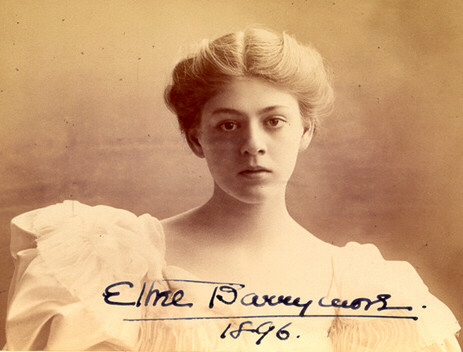
Ethel Barrymore, alongside her brothers John and Lionel, was a bridge between eras, a major celebrity with a recognizable presence in both mainstreams. Unlike her brothers though, Ethel disliked the chaos of film production, and preferred the direct rapport with the audience that she got from stage acting. Indeed, she avoided film acting well into the ’30s and only took it up reliably in the ’40s because she needed the money. In Ethel Barrymore: Shy Empress of the Footlights, Kathleen Spaltro — who previously wrote about Lionel — covers the peculiar story of a girl born in 1879 to an already legendary theater family, for whom the family business was more business than family.
Ethel Barrymore: Shy Empress of the Footlights
Kathleen Spaltro
University Press of Kentucky; 311 pages
While Spaltro has provided an academic, historical text, her book is surprisingly engaging — not least because of all the spicy direct quotes from newspaper reviews and articles. These clips were, in many cases the only information about her activities despite their obvious unreliability.
Barrymore was, in the modern sense, a celebrity, someone everyone knew about and felt free to have an opinion on without having to worry about any political undertones. Theater critics could savage her without worrying about long-term consequences, and often did: some critiques elegantly noted her lack of maturity, poise, or diction, while others just cattily called her fat. While Spaltro does, indeed, present plenty of good reviews alongside the bad, what’s striking about Barrymore’s media is how many of the reviewers were just plain mean — yet still quotable a century later.
Despite what anyone wrote, though, Barrymore kept coming back because all press is good press and box office was something everyone took more seriously than the written word.
There was, though, a purpose to the cruelty. Even at their meanest, it’s clear that theater critics loved the theater as much as Barrymore. For all her often justified hostility to the press, it’s hard to imagine late Barrymore bringing a regal, artistic, elevating temperament to her cinematic work without all those decades of prior feedback. Indeed, Spaltro actually implies that the merciless critics accusing Barrymore, correctly, of getting drunk on stage, were more instrumental to her sobriety than their negativity had been in driving her to the bottle in the first place.
Through these reviews, Spaltro slowly tells the compelling story of Barrymore’s career arc, how she transformed from a late-19th-century ingenue with strong emotional chops and charm but weak technical acting skills to a genuine veteran who elevated her productions yet often showed remarkably bad judgment about which of these plays were worth her talents.
One famous role — among many forgettable and today mostly forgotten ones — was that of Nora in the original Broadway production of The Doll’s House by Henrik Ibsen, although interestingly, the similarly themed The Twelve Pound Look by J.M. Barrie (of Peter Pan fame), ends up in Spaltro’s telling as the play that Barrymore comes back to. Barrymore had an errie proclivity for the role as an ex-wife who later has to affirm and justify her independence to her ex-husband. According to the critics who saw the play, there was a powerful energetic righteousness in Barrymore’s depiction of a heroine who felt like a London-based Nora powerfully immunized with self-esteem.
 There’s a sad irony at play at Barrymore being a major figure in these proto-feminist plays and an explicit supporter of women’s suffrage movements given that over this same time period (the ’10s) Barrymore had jumped into an abusive marriage to Russell Colt. This followed up decades of speculation in the gossip columns as to who this attractive twenty-something celebrity would choose. Despite many decent options (apparently Winston Churchill even made a serious effort at courting her) this strong icon of womanhood marrying Colt was a bit of a head-scratcher. Even his father, the rubber tycoon Samuel Pomeroy Colt, thought he was so irredeemable that surely Barrymore was after the family money, and warned her that the rubber industry wasn’t doing too great at the moment. Barrymore’s affirmation that she planned to support the husband she loved with her work as an actress baffled him, although for what it was worth, Barrymore continued to have a good relationship with her father-in-law even as her marriage inevitably fell apart.
Spaltro can’t avoid these kinds of salacious details because for all Barrymore’s elegance and talent, this was the celebrity life she led. Disputes with management, actors’ unions, the internal revenue service, and publishers over memoir rights don’t easily map to any coherent ideology. But then, these were different times and the nature of her celebrity only accentuates that.
Shy Empress of the Footlights shows acting as a grueling job that Barrymore tolerated mainly thanks to the positive psychic energy she drew from the audience. Their favorable responses to her — even in plays which might be brutally criticized in the press — explain why Barrymore could never quite quit acting when acting itself was an ambivalent experience for her. However, nothing about Barrymore’s behavior is straightforward. The need for money motivated her as much as anything else, and there’s a sort of dark punchline involved with the IRS forgiving her debts because they figured she was cooked as an actress, while not returning the taxes she’d already paid because they figured the old woman would just waste it on something stupid if they did. Barrymore’s ’40s era comeback, in stage as well as film and even radio, is hard to imagine if the people in her life had just kept enabling her.
And of course, not everything was her fault. Film is an inherently chaotic industry. Constant production problems were why Barrymore gave up on silent film in the ’10s despite her marketability as a popular actress. Her attempted comeback in the infamous 1932’s infamous Rasputin and the Empress fared even worse, despite the involvement of her brothers, as the production was so terribly managed it almost immediately fell afoul of a libel suit from the surviving Russian royal family.
Barrymore’s relationship with acting mirrors her relationship to Shakespeare. She had always loved the bard, yet was never quite satisfied with how she grappled with the text — whether because her girlish self lacked the gravity or her older self wasn’t really appropriate for the roles. By all accounts, she was a disastrous Juliet, but an exceptional Ophelia and Portia though, as usual, we have to rely for this opinion, on critics and the box office, which means that her reviews might reflect a shift in perception rather than acting. But one thing never wavered, and that constant — Barrymore’s love of direct communion with the audience — is the focus of Spaltro’s attention.
You May Also Like
-
 September 18, 2023
 -
 October 1, 2018
 -
 January 18, 2019

In what ways did movie stars become more integrated into everyday life than stage actors of the earlier era?
Doesn’t the writer say the opposite? Or at least one type of opposite. Namely, he says that because movie stars are now more integrated into everyday life than stage actors, it’s hard to remember how integrated (more, maybe) touring actors were 100 years ago.