
Marc Bloch Enters the Panthéon
A resistance hero and historian who exposed French antisemitism gets his due
By adding Marc Bloch (1886-1944) to the Panthéon, the ceremonial — and sometimes literal — resting place of heroes of French literature and history like Voltaire, Jean-Jacques Rousseau, and Alexandre Dumas, the government of France has honored an influential historian and member of the wartime Resistance.
Only the third addition this decade, Bloch’s ascent also belatedly acknowledges the shameful treatment of Jewish people during the Vichy period and the many humiliations they had to endure, in spite of their contributions to the social and cultural life of their homeland. Bloch’s story is instructive not just for what it tells us about France’s modern history, but for what it suggests about the nation’s current predicament in an era of rapid demographic and cultural upheaval.
Along with Émile Zola, Victor Hugo, Jean Jaurès, André Malraux, and the others of the Pantheon, the French should never be allowed to forget what befell Bloch, and so many others, in a country that supposedly takes pride in its people’s achievements. Having served in the First World War, and having distinguished himself a historian and a Sorbonne professor, Bloch fell victim to the state-enshrined antisemitism that ruined careers and marked people for deportation and death.
Initially, he was not quite as unlucky as many of his fellow Jews under the rule of Marshal Pétain. The October 3, 1940, “Statute on Jews,” which barred anyone with at least three Jewish grandparents from holding a position in the government, armed forces, media, academia, and other sectors, did make an exemption available for those who had served in the First World War or made a contribution to literature or science, as Alan Riding reminds us in his book And the Show Went On: Cultural Life in Nazi-Occupied Paris. “A few university professors, like the historian Marc Bloch, successfully applied for this exemption, but it would bring them little protection later in the occupation.”
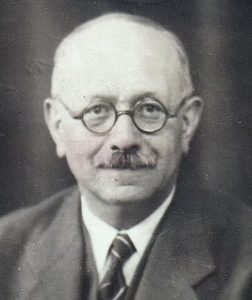
Nor was the antisemitism that inspired the statute anything new. Riding relates that antisemitism had been endemic in France for many years, as borne out by the scandalous Dreyfus Affair (1894-1906). In an early passage of L’étrange défaite, (The Strange Defeat) Bloch’s famous work about the fall of France in 1940, Bloch describes the frequent hostility he met from people with only the vaguest grasp of what it even means to be Jewish. He shares his irritation at having to remind those who would brand him as an outsider that military service on behalf of the French nation is a longstanding tradition in his family, that his great-grandfather had served, that his father stood for France in the midst of the siege of Strasbourg at the height of the Franco-Prussian War in 1870, and that the father and two uncles had had to flee their native Alsace amid the Prussian onslaught.
Bloch has had to tell people, over and over, that he was raised in a patriotic tradition and loves France. “J’y suis né, j’ai bu aux sources de sa culture, j’ai fait mien son passé, je ne respire bien que sous son ciel, et je me suis efforcé, à mon tour, de la défendre de mon mieux,” he writes. (“I was born there, I have drunk from the sources of her culture, I have made her past mine, I breathe freely only under her sky, and I am compelled, in my turn, to defend her to the best of my ability.”)
Despite the nobility of those sentiments, Bloch could not escape from the blind bigotry that held Jews partly responsible for France’s defeat. Among the notions that had currency, Riding writes, were “that even French Jews were not really French because they owed allegiance more to Judaism than to France; that foreign-born Jewish refugees, about one-third of France’s 300,000-strong Jewish community, were fifth columnists; that Jews had pushed France into war with Germany,” and that Jews had outsized influence in government, business, and culture. Though he did gain admission to the faculty of one of the world’s great universities, the Sorbonne, Bloch, for all his eloquence and erudition, could not gain the respect and recognition from the Vichy regime that he deserved, much less from the SS, which executed him on June 16, 1944.
 Though unfamiliar to many Americans, Bloch’s work can and should endure for his insights into the causes of France’s collapse in the face of German aggression in 1940. It is a pity that Bloch describes a military that had failed to adapt to the fast-growing menace on its eastern border (despite Hitler’s explicit threats in Mein Kampf) or to rapid changes in the technologies and methods of warfare. As Bloch puts it, the opening days of the conflict were a contest between the spears of the French and the rifles of the Germans. As German mechanized columns moved into Normandy, France’s officer corps had little sense of the speed with which the enemy could move, and so severe was its confusion that “rear” echelons were sometimes closer than “advance” ones to the invaders.
To take one example, an unexpected traffic jam prevented a reserve battalion sent to protect a village in Flanders from reaching its destination, but a small advance force, not knowing that Germans had already overrun the village, met with a storm of machine-gun fire and everyone died or got captured. Soldiers on the front lines and their officers all were graduates of the same military schools that had promulgated the same outdated doctrines, Bloch laments, contrasting their operational ineptitude with the agility and élan of the Germans. No translation can quite capture the ironic flavor of Bloch’s analysis: “Tout le longue de la campagne, les Allemands conservèrent la fâcheuse habitute d’apparaître là où its n’auraient pas dû etre.” (Roughly, “Throughout the length and breadth of the countryside, the Germans maintained the annoying habit of appearing where they could not have been.”)
In a crowning example of French military incompetence, an officer in Landrecies, on the northern coast, in charge of a semi-mobile fuel depot (which Bloch calls a relic of a type of warfare that existed only on paper), spotted a column moving toward Cambrai, and did not quite recognize the color of its uniforms. Thinking that the column meant to move to the front but had lost its way and gone the opposite direction, the officer went running after it, until a random bystander shouted out to him that it was a column of German infantry.
Bloch deserves his inclusion in the Panthéon for having written what may stand as the most penetrating study of France’s doomed resistance. L’étrange défaite is all the more remarkable for the circumstance that, as Bloch acknowledges at the start of the book, he did not know whether it would ever find a publisher and an audience.
His work resonates today for another reason. As the experience of the Charlie Hebdo mass shooting in January 2015, and the November 2015 Paris attacks that killed 130 and plunged the country into a state of emergency for months, make plain, France has had no idea how to view or respond to its demographic and cultural remaking in the wake of a massive influx of communities for which her values and traditions are not embedded.
Despite the claims of the French Right, most Muslims are not terrorists, but equally many Muslim citizens of France — especially the young ones — are ill-served and alienated by their country. Today it is not the military that needs urgently reforming, but coherent policies around immigration and national security obviously require far more foresight and sense than the nation’s political elite has so far brought to bear. If the failure of nerve, and vision, continues, France is headed for another “strange defeat” that could be as calamitous and humiliating as anything Marc Bloch described.
You May Also Like
-
 November 5, 2019
 -
 April 2, 2020
 -
 March 29, 2026
