
Slavoj Žižek Can’t Name the Monster Anymore
‘Liberal Fascisms’ is the latest of the viral Slovenian philosophers collected essays
Reading Slavoj Žižek has always been a slightly exhausting experience. Not because he’s unintelligent — quite the opposite — but because reading him often feels like listening to him speak: every page seems to twitch with energy. His essays jump from Georg Wilhelm Friedrich Hegel to The Matrix, from Jacques Lacan to The Hunger Games, from Stalin to Hollywood itself, with the nervous energy of someone terrified that silence might accidentally produce clarity. Sometimes it’s brilliant. Sometimes it feels like performance art disguised as philosophy.
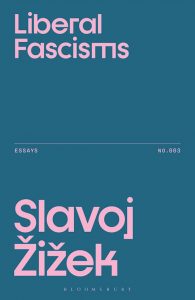
Liberal Fascisms
By Slavoj Žižek
Bloomsbury; 179 pages
Liberal Fascisms, the third volume in Žižek’s ongoing series of collected essays following Quantum History and the bestseller Against Progress, gathers texts written between 2016 and early 2026. The collection functions as a philosophical chronicle of a decade defined by political upheaval, technological acceleration and cultural fragmentation. Loosely structured around what he calls a triad — the global predicament, regional turbulences from Europe to the Middle East, and finally Trump’s America — it reads less like an argument built in sequence than a philosopher thinking out loud in real time, chasing headlines with Hegel in one hand and a Netflix remote in the other.
At his most quotable, Žižek describes the Trump phenomenon as “not fascism with a liberal mask, but liberalism brought to its (fascist) conclusion.” It is, characteristically, both a clarifying insight and the kind of line that sounds better in a lecture hall than on the page.
However, Liberal Fascisms reveals something more troubling than another one of Žižek’s intellectual marathons. It reveals a philosopher who reaches for old words precisely when history demands new vocabulary.
There is an old idea — attributed to different thinkers over the years — that philosophy’s highest task is to name what was previously unnameable. As Ludwig Wittgenstein had it, “Whereof we cannot speak, thereof we must remain silent.”
Friedrich Nietzsche gave us nihilism. Michel Foucault gave us biopolitics. Jean Baudrillard gave us hyperreality. Whether they were ultimately right is almost secondary. They understood that history occasionally mutates into forms that inherited language simply cannot describe.
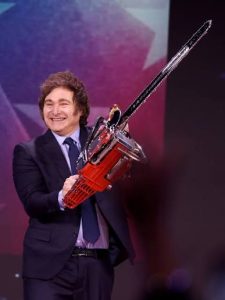
Žižek looks at Donald Trump and the broader populist ecosystem around him — Nayib Bukele, Javier Milei, and others cut from a similar cloth — and reaches, once again, for the word “fascism.”
The diagnosis is intellectually comforting.
 It is also profoundly unimaginative. The temptation to recycle twentieth-century categories is understandable. Fascism remains our greatest political horror, the benchmark against which every authoritarian impulse is measured. But resemblance is not identity. Calling every new mutation “fascism” risks explaining everything and understanding nothing. A platypus is not simply a badly assembled duck.
The deeper irony is that Žižek himself provides the evidence against his own argument.
His essays in Liberal Fascisms are saturated with references to popular culture and other cinematic touchstones appear with such frequency that one begins to wonder whether contemporary philosophy has quietly outsourced part of its imagination to Hollywood. Yet this is precisely what made Žižek such an influential interpreter of late capitalism in the first place. Long before academics took superheroes seriously, he understood that ideology often reveals itself more clearly in blockbusters than in manifestos. If Hollywood is the ultimate factory of capitalist fantasy — as Žižek himself has argued for decades — why does it remain his preferred philosophical vocabulary?
Perhaps because that is where our collective imagination actually lives now. And that’s precisely the point his book never fully confronts.
Trump didn’t arrive quoting Mussolini. Bukele didn’t build his popularity in El Salvador by rediscovering Carl Schmitt. God knows what Milei is doing, but he isn’t simply channeling some forgotten European strongman either. Nor, for that matter, are figures as different as Giorgia Meloni or Narendra Modi adequately explained by reaching for the same historical template every time.

Whatever else these leaders may be, they emerged from media ecosystems radically different from those that produced the mass movements of the twentieth century. They understood something that older political categories struggle to explain: politics no longer unfolds primarily in parliaments or newspaper editorials. It unfolds inside the social media feeds of the voters.
These are leaders optimized for engagement. Their speeches become clips before they become policy. Their insults become memes before they become ideology. Their political instincts have less to do with fascist aesthetics than with recommendation algorithms, outrage cycles and dopamine economies that reward attention above coherence.
Dopamine politics is not an ideology in the traditional sense, but a political operating system built around attention itself. In dopamine politics, virality matters more than coherence, emotional stimulation outperforms persuasion, and visibility becomes a form of power independent of policy. Politicians increasingly behave less like party leaders and more like content creators competing inside an algorithmic marketplace where outrage, novelty and identity are rewarded with reach. The goal is no longer merely to win elections. It is to dominate the feed.
Ironically, Žižek himself rose to prominence through a version of the very same ecosystem he diagnoses. He was never obscure — his reputation was built the old way, through books, lecture circuits, and decades of serious philosophical output before most of his current audience was born. But somewhere along the way, clips of him gesturing wildly about Hitchcock and toilet design started outperforming his books. He didn’t become viral. He got absorbed by virality — which may be the more unsettling version of his own thesis.
This lack of self-awareness of its own condition makes Liberal Fascisms strangely melancholic. It reads like the work of someone who brilliantly understands spectacle while underestimating the machine that now manufactures it.
His call to abandon hope feels equally detached from the emotional climate of the twenty-first century. Žižek argues that liberals still cling to the comforting illusion that institutions will eventually correct themselves. I honestly don’t know where these people are. Our era isn’t defined by optimism. It is defined by doomscrolling. We refresh our phones not because we believe tomorrow will be better, but because we’re convinced something worse has happened in the last five minutes. Climate collapse. Artificial intelligence. War. Economic anxiety. Democratic decay. Cynicism isn’t a fringe emotion anymore. It is the default operating system of Western consciousness.
Nor is the supposed collapse of public morality particularly novel. History has never suffered from a shortage of shameless leaders. Stalin wasn’t defeated because voters suddenly discovered ethics. Hitler didn’t rise because Germans temporarily misplaced their moral compass. Political obscenity has always existed. What’s different today is the machinery around it: shamelessness now circulates at algorithmic speed, and that speed is not accidental — it’s manufactured by a handful of corporations that own the pipes through which all outrage, ours included, is forced to travel. Meta. X. Alphabet. It isn’t just that shame disappeared faster. It’s that a handful of companies built the perfect infrastructure for its disappearance to pay dividends.
Perhaps we’ve been looking for fascism simply because it’s the last political horror we know how to recognize. But what if the defining political logic of our century isn’t fascism at all? What if it’s something far less coherent — and therefore far more difficult to resist? Call it what you want — algorithmic authoritarianism, dopamine politics, the attention regime. The label matters less than admitting the old one no longer fits.
And in his own peculiar way, Žižek got swept up in the very same current he’s trying to diagnose — a philosopher who mastered Hollywood’s grammar just as politics itself started speaking it.
The tragedy of Liberal Fascisms isn’t that Žižek misreads Trump et al. It’s that he mistakes dopamine politics for fascism. One belongs to the twentieth century. The other may well become the defining political language of the twenty-first.
History doesn’t merely repeat itself. Sometimes it mutates. The philosopher’s task isn’t merely to recognize yesterday’s monsters. It is to notice when evolution has quietly created a new one — and to have the courage to give it a name.
You May Also Like
-
 December 6, 2019
-
 July 14, 2022
-
 October 23, 2025

The part about how neither Trump nor any other world leader cites the classics is funny because I can think of one who definitely does. Putin. But it’s very much a case of the exception that proves the rule, because Americans were genuinely bewildered when Putin went on Tucker Carlson and explained his Ukraine policy in terms of centuries old history contextualizing Ukraine as a polity which has never held meaningful independence except to the extent great powers stoked ethnic conflict there for their own geopolitical purposes. We genuinely can’t process an ideology any more complex than freedom good, to the point that Putin seems like a preposterous aberration when most world leaders, historically speaking, would have used this kind of reasoning to explain their actions.
That’s actually a great exception, and I think it reinforces rather than weakens my point. Putin still frames politics through nineteenth- and twentieth-century categories: empire, historical destiny, spheres of influence and civilizational identity. Whether those claims are persuasive is another matter.
Trump, Bukele, Milei—and increasingly many democratic politicians—operate in a fundamentally different ecosystem. Their primary battlefield isn’t history but attention. Their legitimacy is built less through coherent historical narratives than through engagement, memes, viral clips and algorithmic amplification.
In that sense, Putin is almost an ideological fossil. He still speaks the language of geopolitics. Dopamine politicians speak the language of the feed. Putin wants to control territory; they want to control attention. Increasingly, the second is proving just as powerful.
I don’t know if I’d go that far. Certainly, the predominant belief in our societies is that controlling attention is just as powerful as controlling territory. But real life isn’t Dragon Ball Z. You can’t destroy the bad guys with a spirit bomb filled with positive thoughts, you need ordnance. Propaganda used to be designed to inspire people to put in the requisite effort to build ordnance. But under the current memetic model, simply believing in the righteousness of the cause alone is presumed to be good enough without any need for that second step.
The only reason it seems to be working is because the existing position of the United States was so strong it didn’t really matter who was in charge, so long as they retain access to all our existing structural advantages. But those structural advantages are looking scrawnier every day. I doubt the likes of Millei or Bukele could survive even a few weeks without them.
I actually think we’re talking about two different stages of power.
You’re absolutely right that territory, industry and military capability still determine the outcome of wars. No meme can replace artillery.
My point is different: before leaders mobilized populations through ideology. Increasingly, they mobilize them through attention. The battlefield hasn’t disappeared; the recruitment system has changed.
That’s why I call it Dopamine Politics. It’s less a theory of geopolitics than a theory of political legitimacy in the algorithmic age. Putin still builds his legitimacy through history. Trump, Bukele and Milei build much of theirs through continuous engagement, spectacle and algorithmic visibility. Military power still matters. But attention has become the currency that determines who gets to wield political power in the first place.
In that sense, memes don’t replace ordnance. They replace pamphlets.