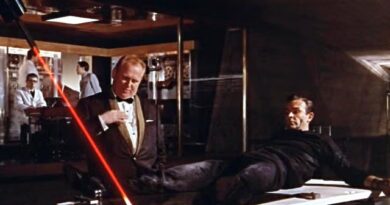
On Bond Day We Ask, Should James Bond Still Exist Today?
Will we still love 007 now he’s 64?
Today, October 5, if someone asks your name, fill your lungs with pride and answer in the most mysterious, seductive tone you can manage:
“Bond. James Bond”
— I know I will.
Be prepared, though. There’s probably going to be someone out there ready to tell you that you’re a misogynist, a toxic man, a dinosaur, and every other name in the book. But you still have the right to call yourself James Bond today. Because today is the official day of the greatest secret agent in the history of humanity.
Even if the world is no longer as simple as it was when the mythical Dr. No premiered on a day like today, October 5, 1962. Back then, the worst possible outcome was, well, a nuclear armageddon.
Barely two weeks after that first silver screen Bond appeared, the Cuban Missile Crisis erupted and the end of the world itself seemed to be peering out from somewhere in the Caribbean. The British Empire was already fading into history. The world felt suspended in a transition toward God-knows-what. And yet, with the arrival of the world’s most unflappable secret agent, that unstable, almost fatal world found a new kind of hope. Like what? Like a superhero, but even better: the hero who felt most like one. Someone you could actually imagine running into at a casino… or drinking martinis… provided, of course, that you were also a spy. Or a millionaire with a gambling problem.
That same day, by the way, the Beatles released their first single. They did their part too, but that’s another story.
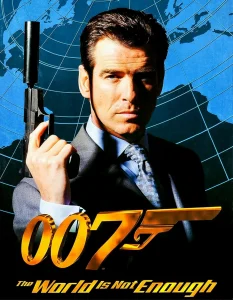 Today is the day we celebrate the pure, uncut wonder of having a license to kill, an Aston Martin, and the willingness to sleep with the most dangerous women on the face of the earth. Because the film evinced two certainties: Russians were bad… and Bond knew what a woman was.
But here is where celebrating James Bond gets complicated.
Because what exactly are we celebrating?
The Aston Martin? Absolutely. The martinis? Obviously. The license to kill? Well, perhaps that one needs a little more explaining these days.
Because James Bond is a misogynist. He is arrogant, violent, emotionally unavailable, promiscuous, narcissistic, drinks like a fish and kills people for a living. He is, in other words, pretty much everything that can be wrong with a man today. Which is ironic when you consider that this particular man has saved the world more times than most of us can count.
I was talking about Bond recently with a woman who is an activist in a feminist organization. For her, James Bond represents practically everything that is wrong with men. And I understand the argument. I really do. But I had one problem with it.
James Bond doesn’t exist.
I wish he did, but not because I think men should go around behaving like James Bond. It is just because if the world ever needed a fictional character whose entire job description was to save it from lunatics, dictators, mad scientists, egomaniac billionaires and trillionaires planning to colonize space, presumably to escape the AI apocalypse they helped create themselves, it might be now.
The strange thing is that we have gradually started treating Bond as if he were a documentary about men.
It isn’t.
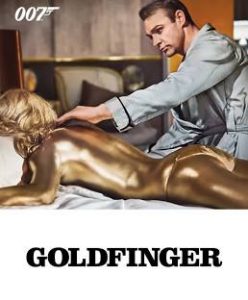
 Look at his very first adventure on the screen. The man is fighting Dr. No, a villain with mechanical hands who lives on a Caribbean island and has apparently decided that threatening the entire Western world is a perfectly reasonable way to spend his time. This is not realism. At what point did we have to clarify that it was never supposed to be?
This was the world of Bond, where the villains were evil, the heroes were good, and the stakes were enormous, but also where the Cold War was real, nuclear annihilation was a terrifying possibility, and yet the movies turned that nightmare into something almost comic-book-like.
And that was part of the point.
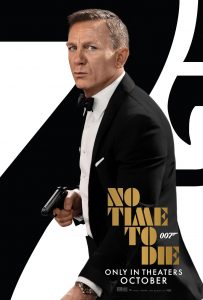
 The problem today is that we seem to have become increasingly incapable of treating absurdity as absurdity. Why? I don’t know, and I don’t want to go to therapy in order to find out. But nowadays everything has to mean something. Every fictional character has to represent something. Every fantasy has to be examined as though it were a political manifesto. Every bad guy must come with a psychological explanation, and every hero apparently needs to explain his feelings before he is allowed to save the world.
And this is where Daniel Craig enters the story.
Craig’s Bond movies were successful. Some of them were excellent films. Craig himself was an extraordinary action-thriller actor…
But something very strange happened to the character. Bond became vulnerable, traumatized, emotional. And then he acquired a past that needed explaining, and wounds that needed healing. For Christ’s sake, why? He fell in love, of course I understand that. He suffered, yeah, I also understand that. But he carried his pain around like some kind of expensive luggage. Hell no.
The old Bond could get shot, order another drink, and screw some spy lady just for the sake of it.
The interesting thing isn’t whether Craig was a good Bond or a bad Bond. The interesting thing is that, for the first time, it felt as though James Bond had to adapt not simply to a new actor, a new director, a new screenwriter or a new cinematic fashion. He had to adapt to us. Connery’s Bond was different from Moore’s. Moore was different from Dalton. Dalton was different from Brosnan. Each generation reinvented the character in its own way. But nobody seemed to be asking whether Bond himself was culturally acceptable. They were asking and answering what kind of movie they wanted to make. And effectively, that distinction matters. Why? Because perhaps the most revealing thing about this modern Bond issue is not that he changed, but why he had to change. And that’s what is almost creepy for me to digest.
And now, on James Bond Day, that leaves us with a rather uncomfortable question: do we still want a James Bond at all? Or do we want a version of James Bond that can survive being James Bond in 2026?
It is not worth debating whether James Bond is politically correct. We already know he is not. We can argue about the meaning of his characteristics but the main point here: whether we can still allow a fictional character to be exactly what he was created to be — a mythical fantasy, a caricature.
There is something really outrageous about that. Because the moment Bond has to become acceptable to everyone, he stops being James Bond.
And maybe that is why the next Bond matters more than we think.
Amazon, which now owns the James Bond franchise, has a huge responsibility towards the fans, the real fans, but also towards the character himself. Because whoever plays him will have to answer an even stranger question than the ones his villains have to answer: can James Bond still exist in a culture that no longer seems entirely sure what to do with James Bond?
And I’m not alone in hoping the answer is yes.
And I hope he drinks the martini, drives the Aston Martin, walks into a casino wearing an absurdly expensive tuxedo, looks at the woman across the table, and introduces himself with that ridiculous, immortal line that I repeated while being drunk so many times throughout my life. Because for one day, at least, I don’t want James Bond to explain himself. I want this guy to save this godforsaken world and then order another drink: shaken, not stirred.
Happy Bond, James Bond Day.
You May Also Like
-
 November 6, 2020
 -
 October 7, 2021
 -