
Shiamin Kwa Unveils Her ‘Secret Menu’
Dartmouth and Harvard grad charts her path from Kuala Lumpur and Tampa to Bryn Mawr via food
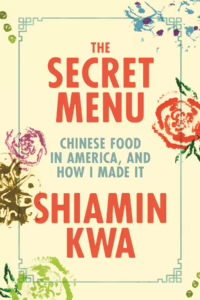
Shiamin Kwa’s new memoir, The Secret Menu : Chinese Food in America, and How I Made It, surprises the reader. We imagine, judging by the book’s cheerful cover and optimistic title we will be gifted with a heartfelt chronicle about Kwa’s immigration to the United States from Malaysia at 12 and her rise to becoming a distinguished Professor of East Asian Languages and Comparative Literature at Bryn-Mawr College in Pennsylvania.
The Secret Menu : Chinese Food in America, and How I Made It
By Shiamin Kwa
Farrar, Straus and Giroux; 384 pages
We anticipate hearing about her gratitude for what America has allowed her to become. But we would wrong to make such assumptions here. As with her previous three books of literary criticism her analysis is sharp. Here, as a memoir, Kwa’s work is introspective and bitingly authentic about her own hard-fought journey to find a more joyful existence. First-person narratives take us into the mind of a wounded woman who has overcome obstacles that would have overwhelmed a lesser woman.
The story begins in Kwa’s cluttered kitchen with her bold confession that she still has not mastered her tendency to apologize to those she feels she has offended, and even those she has not. On this day, she is trying to explain to a perplexed repairman why her kitchen is overflowing with stuff almost falling from the countertops. She tells him apologetically it has to do with the fact that her beloved son and daughter are always hungry, and she is constantly feeding them, as well as feeding her Jewish husband. She can see the repairman doesn’t believe her; nor does he seem particularly interested in what she is saying. But Kwa knows the truth. The avalanche of clutter is a result of her inability to “tolerate empty space.” She describes the mess that surrounds her defiantly:
Why there are a dozen different vinegars, even multiple unopened duplicate bottles of some: rice wine, apple cider, balsamic, baoning, baoning aged ten years, red wine, white distilled, black chinkiang, seasoned for sushi, sherry, Chinese red, cane sugar, spiced natural pomegranate, saba, artisanal balsamic…
She uses these ingredients to prepare all sorts of Chinese dishes. This has become her obsession; a way to escape the sadness and loss that has followed her since she was a young child. She understands how all this stuff she hoards is some sort of compensation for something else but chooses not to dwell upon what that might be, almost as if it might dampen the spell it has cast upon her. Kwa’s unconventional coping mechanism forces us to consider how all of us must find ways to exist in our broken worlds.
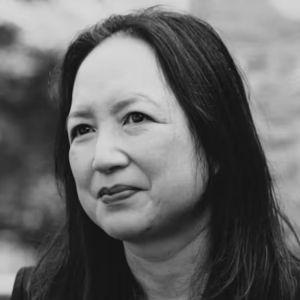
Kwa grew up as part of the Chinese diaspora in Kuala Lumpur in Malaysia and left her family at 12 to live with an aunt in the United States. Her relationship with her mother was always strained and she accepted her fate lay elsewhere. But her family would follow her to the United States a year later and the family settled in Tampa where her father, a doctor, found a job as a college professor. Kwa stopped thinking too much about Malaysia. When she finally returned to Malaysia at 25 for a visit, she felt estranged from it describing herself as “uncountried.”
Kwa’s family was part of the enormous Chinese diaspora that had come to Malaysia from China centuries ago. Kwa traveled on her return visit through Malaysia only finding comfort in the foods she found there which she could not find in America.
Kwa’s early experiences in America were disturbing. Most people had never heard of Malaysia, and she stopped trying to explain her origin saying simply she was Chinese. But these inquiries clearly irritated her leaving her feeling uncomfortable in America. She was awkward and shy, an outsider who always remained cautious with others.
But being comfortable with herself anywhere was always challenging for Kwa. Even as a little girl in Malaysia she struggled at school. When her elementary school teacher requested all the students in her class find a pen pal somewhere in the world, she worried the pen pal would reject her. She recalls thinking at the time “Was my conception of myself false?” She worried they would find her letters disappointing. She remembers feeling alone even though her life in Malaysia as a little girl was a privileged one, filled with swimming and tennis lessons and performing well at school. She didn’t know how to express herself to others nor was she courageous enough to share her dreams and hopes with anyone else.
Kwa’s journey into the world of Chinese food begins with her own electric memories. She relished the pure joy she felt as a child when she bought hot bread from the roti man in Malaysia. Or just thinking about how her grandmother would slice shallots into paper-thin rings and fry them into hot oil until they were crisp. Better still were the coconut wafers she was occasionally allowed to indulge in. Another delectable treat was the popal her grandmother often made, which were white wheat flour wrappers that held luscious fillings. Chinese food in all its iterations became her primary fascination. She loves the variety it offers; the endless learning there is to pursue about how Chinese dishes are prepared all over the world. Kwa still takes great pleasure recalling Mei Mei’s — the hole-in-the-wall Chinese restaurant called she found while still an undergraduate at Dartmouth. There she ate the roast pork fried rice as often as she could, and still remembers the “wrinkled peas and translucent onion dice” as well as the “honeyed little red chunks that left a stain where it touched the rice.”
Much of the book is filled with Kwa’s descriptions of food and there are many recipes offered for us to try. We learn how to make curry mee, one of her favorite dishes, which is a noodle soup made with coconut milk, sambal, chili peppers, shrimp paste, caramelized shallots and garlic, galangal, sugar, and a twist of citrus. When she writes about food, Kwa’s narrative voice melts into something more vulnerable and accessible almost as if talking about food allows her to forget her self-consciousness. For Kwa, it is evident food and cooking aren’t just about eating; but about so much more. Her descriptions of certain dishes are mouthwatering. For reasons that remain mysterious to Kwa, the nagging perfectionism that haunts her in her academic endeavors aren’t present when she is cooking. She allows herself to make mistakes and try different things without castigating herself if things go awry. It’s as if she has found a place to feel free.
Kwa finds her own reactions to new foods intriguing. For example, as a teenager in Tampa, she was served baked apples and cinnamon by her friend’s mother and felt the urge to vomit. In Malaysia, apples were only eaten crisp and tart. But she learned to love baked apples and today makes her own with whipped cream and rum on top. This reckoning, that one could change one’s outlook on something, was pivotal for her. She started to feel more confident in the world. She found a tenderness inside of her she had kept buried afraid it would be trampled upon. Her relationship with her family improved. Kwa writes: “Just as food in a single arrested moment can be used to articulate essential difference, food in its recursive form allows us a way to think about how we can be in the world. It suggests we can be adaptable, generous, life-giving, aware of where we came from but not precious, not jealous, not stingy about that origin.”
Kwa began to see food as a gateway to other reckonings.
She recalls hearing her parents and grandparents whispering about the past. There was always a lot of violence in Malaysia. Both her grandparents were arrested for just being Chinese and in the wrong place at the wrong time. Some people just disappeared. The possibilities for ethnic Chinese like her family was always restricted because they were thought not to be Malaysian enough. America was no better. There was the Chinese Exclusion Act of 1882 and the endless stories of random violence against the Chinese. Although she makes no such declaration, we can hear her begin to empathize with her parents’ paranoia; as well as their nervousness about her finding a successful and safe life.
Many of us believe there is only one way to heal. We must confront our demons head on and somehow emerge whole. But anyone who has sat in a therapy session baffled and uncured understands how this process can go haywire. Some of us can’t lower our defenses or remember the childhoods that have left us reeling. We know only that we hurt and want it to stop. Kwa has channeled her pain, suffering, and discomfort into her immersion into cooking and preparing all sorts of Chinese food. This obsession has taken hold of her and won’t let her go. And she shares it with us with a hard-fought but undeniable joy. It has allowed her to get out of her own way.
You May Also Like
-
 September 25, 2020
-
 July 19, 2022
-
 June 22, 2023
