
Do You Have the ‘Will and Attention’ To Escape the Bottle?
Meghan O’Gieblyn’s new memoir faces up to faith, addiction, and techno-skepticism armed mainly with a spiritual World War II philosopher
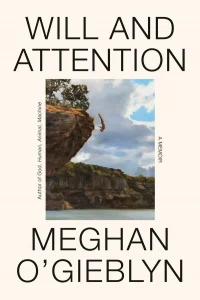
Meghan O’Gieblyn uses great works from the past to analyze the most pressing and important aspects of her present. In her new memoir Will and Attention, in which O’Gieblyn focuses on saving herself from alcohol, she relies on intellectual heavies such as Dante and Schopenhauer, but mostly on the 20th century mystic writings of Simone Weil.
Weil, who is more known for her writings on activism, also wrote Gravity and Grace, a book of philosophical musings that was only posthumously published. The line that sticks most with O’Gieblyn is from Weil’s essay “Attention and Will”: “We have to try to cure our faults by attention and not by will.” Why this line? What precisely did Weil mean by “attention”? O’Gieblyn never claims to know, but her focus on trying to know becomes the bedrock upon which to build herself back up from emotional and spiritual bankruptcy brought on her life by alcohol.
Will and Attention
By Meghan O’Gieblyn
Doubleday; 288 pages
O’Gieblyn’s previous work of nonfiction, God, Human, Animal, Machine (GHAM), focused on the author’s loss of her Evangelical faith as a college-level Bible school student, and her subsequent flirtation with the latest technology to fill that religious vacuum. O’Gieblyn dedicated GHAM to the idea of digital technology as the possible solution to her spiritual malaise. She was especially curious about the Singularity, or the transferring of the essences of people to the digital world in a way that perhaps would allow them to live non-carbon-based lives forever. As Neal Stephenson had already wondered in his 2019 novel Fall; or, Dodge in Hell, could one simply upload oneself to heaven? For O’Gieblyn, perhaps such a tech solution was a possible avenue back to religious enchantment.
For me, reading GHAM was like watching a horror film. I was constantly screaming in my head, don’t do it, when it seemed the author was considering an eternity as 1s and 0s. To her credit, O’Gieblyn takes the Singularity seriously in GHAM and interrogates it responsibly through the lens of Christ, Descartes, Kierkegaard, and other notable thinkers. The book reminded me that no idea should be seen as threatening in itself. It’s only our inability to analyze it properly that makes it dangerous.

In Will and Attention, O’Gieblyn reveals how she used alcohol in her twenties to help her deal with her spiritual malaise. She managed to stay sober for over a decade before succumbing again in her late thirties. After serving as a kind of pillar of her recovery community for over a decade she notes that “My life has lost its arc, and I fear that it’s become less a narrative than one of those demented children’s songs that goes around in circles.” The familiar arc of the addict, stability and sobriety cascading into relapse, is very real for her. Her 11 years of recovery disappeared; Whatever power she thought she had over her addiction proved deluded.
One of O’Gieblyn’s biggest challenges was coming to terms with feeling the lack of God. Fascinatingly, O’Gieblyn associates the start of her fall from the wagon with her attempt, in her late thirties, to become Catholic. She began frequenting services in the middle of the day, enjoying the pageantry from a back pew but not taking the host. “I was the only one who remained seated as everyone else went forward to consume the Body of Christ.” According to O’Gieblyn, her flirtation with Catholicism was the gateway drug that got her back on the path toward the bottle. The smoking and not inhaling of faith was enough to send her toward the unavoidable need for something resembling divine escape.
O’Gieblyn’s success with GHAM set her up for a new life as a voice of reason at technology conferences, which served as a further frustration that propelled her toward relapse. “I spent countless hours sitting at the boarding gates of domestic terminals, listening to meditation lectures, idly scrolling through machine-learning Twitter, consuming every piece of news about a technology I’d come to see as the incarnation of evil and about which I was expected to speak in that reasonable tone of cautious receptivity that earned one a seat at the table.”
Though her thoughts and beliefs had drastically changed after GHAM, O’Gieblyn had set up a career based on her positions in the book and needed to play nice with technology culture to keep her standing in the field. When she chronicles someone in the audience of an AI panel saying, “Who the fuck wants this technology?” it’s adduced with an implication of approval.
 Before long, O’Gieblyn was drinking in airports and hotel rooms, getting just sober enough before coming home to avoid her husband’s suspicion. To help, she would take baths to cover up the smell of alcohol coming from her pores. Beyond these excursions, she continued to live the life of a sober person, at one point talking on the phone — while drunk herself — to a teenage relative and fellow addict about abstaining. Several months passed before she finally got drunk enough to be forced to confess her relapse to her husband, who immediately forgave her. She writes, “I think I would choose to live through all of that affliction again, to live it over just as it was, any number of times, if it was the only way to preserve this moment of grace.” What could be more religious than that?
The road back from relapse for O’Gieblyn goes through Weil’s writing, especially the mystery of what “We have to try to cure our faults by attention and not by will” might mean. Importantly, the process of seeking wisdom through Weil and the works of other great writers leads O’Gieblyn up the true path — as distinct from acquiring it, which is an entirely different kind of understanding. “You cannot give your full attention to something you are trying to acquire, nor understand something that you are hoping to consume.” Like anyone who lives a life in words, there is seemingly no end to this path for O’Gieblyn, no brilliant understanding that never needs to be wrestled with again. Easy reconciliation is for Google searches. The real questions of the world take lifetimes of attention.
You May Also Like
-
 September 14, 2022
 -
 January 3, 2019
 -
 January 6, 2019
