
Inside ‘Nevermore’ : Webtoons’ Gothic Romance Phenomenon
Creators Kit Trace and Kate Flynn discuss the origins, inspirations, and pressures behind their wildly popular comic
Few comic artists outside of the DC or Marvel Comics cartels can boast of having their art viewed seventy million times. But on the webcomic platform Webtoons, artists Kit Trace and Kate Flynn have done just that, with the creation of their Gothic romance Nevermore, one of the platform’s most successful Western comics.
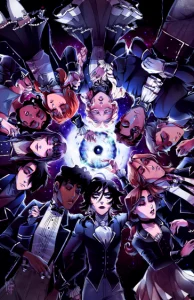 Nevermore is a supernatural romance, revolving around a colorful cast of characters bound by a common feature: they’re all dead. People from across the 19th and 20th centuries — a Southern belle, a housemaid, a French magician, a flapper, and a cardsharp, to name a few — have all been transported after death to the eponymous Nevermore Academy to play a lethal series of games. The ultimate prize? The one and only chance to be reborn and start a new life.
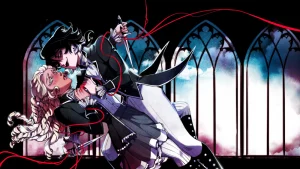
Nevermore’s heroine is Lenore, a tomboyish American aristocrat with a thirst for knowledge and a love for her friends. Her love interest and opponent is Annabel Lee, a feminine and calculating woman with a knack for luring useful people to her to be used as tools. The series naturally takes much of its inspiration from the works of famed American author Edgar Poe. Nearly every other character is in some way a reference to Poe’s oeuvre.
Since its debut in 2022, Nevermore has racked up nearly a million subscribers, with 147 episodes published as of January 2026. Nevermore is an oddity on the Korea-based Webtoons site, where manhwa and manga dominate the field. Though thousands of Western comic series are updated every day, most of them consist of small but dedicated fandoms. Not so with Nevermore, which is so popular it has its own merchandise shop. Creators Kit Trace and Kate Flynn happily gave an interview explaining the origins of their comic, their reception to its celebrity, and their plans for things to come.
(This interview has been edited and cut for clarity.)
BFG: How did you two start collaborating, and what brought you to Webtoons? What do you think of the platform? What are its strengths and weaknesses?
KIT: Kate and I have been pocket friends since high school; we used to play games together online. She eventually went to art school and I went to a liberal arts college where I majored in English. Once we graduated, we both got unfulfilling office jobs and eventually I had a bizarre dream where we made comics together. When I told her about it, she liked the idea!
 We had been publishing comics online together for 8 years before we were approached by a Webtoon editor. They told us they’d read our first series back when they were in high school, and it made us feel very old! But I always tell creators who are looking for advice to just keep creating, because sometimes you’ve already secured your next big opportunity and just don’t know it yet.
When it comes to the platform? I think Webtoon has been making some mistakes in the past few years. I have a lot of fond nostalgia for the Webtoon that centered creators and readers over corporate partners and shareholders. I’m still hoping they come back around, because there’s so much potential here. I love how anyone with enough motivation can make and post their passion project. The eternal scroll format is like candy to storyboard. And comics have never been more accessible than they are in the era of digital webtoon apps.
There are downsides too, of course. The weekly production schedule can be tough, and as fun as the eternal scroll is to work with, converting it to print is a chore. I also really don’t love the requirement to be an Internet Person and participate in social media. If we could live in the woods and tie our finished episodes to the leg of a carrier pigeon once a week, we absolutely would do that.
How did you get into creating fiction/making comics? Have you got a favorite comic or graphic novel?
KATE: Honestly, I think both of us were daydreamers growing up. I don’t think we got into it at any point—we just always defaulted to daydreaming and writing little stories and doodling in the margins. We just took it increasingly seriously as time went on.
As for favorite comics, we’re both Junji Ito enthusiasts, and I read a lot of Shonen Jump. Promised Neverland and The Ichinose Family’s Deadly Sins are some standouts I can think of.
What’s your method for creating narrative and character design?
KATE: It starts with the narrative concept, coalesced after lots of discussion and walks through the woods. As far as visuals, first is inspiration sheets and rough sketching to find the direction we want to move in. Then I do ten to fifteen concepts and we narrow focus, rinse and repeat.
How has it been handling the celebrity of such a dedicated fandom?
KIT: I don’t know if I’d call it celebrity! We still go to the grocery store in ratty sweatpants and unwashed hair. But there’s a level of expectation and attention online that we still aren’t completely used to.
 The vast majority of the attention we get is positive, and we really appreciate all the support. That’s the thing that touches me the most — when people tell us that reading Nevermore made them want to create their own stories. Nothing AI makes will ever be a suitable replacement for real art made by real humans.
How did you choose Edgar Poe for your main inspiration?
KIT: We like to call Edgar Poe “Father Goth.” Many don’t realize that he’s also responsible for the detective novel and, in many ways, the adventure novel — think Sherlock, 20,000 Leagues Under the Sea, and Treasure Island. Poe’s influence is everywhere.
My favorite work by Poe is his poem “Ulalume.” Jeff Buckley recorded a reading of it, and it’s a great way to experience the poem if you don’t want to read it aloud yourself.
Lastly, can you give us any teasers for the future?
KATE: I wish I could, but that would spoil the fun. All I can really say is that I’m wildly excited about the future of Nevermore.
You May Also Like
-
 January 16, 2020
 -
 March 19, 2020
 -
 August 2, 2022