
Nine Books on Immigration
From the politics of imprisonment to the wonders and tragedies of being forced to leave home
The United States is obviously having a unique political moment, and it is hard to capture that without discussing immigration policy. This year’s literature is no exception. While I have written about my favorite books about immigration before – and those are hall of famers – there’s a lot of excellent current writing on the subject. The authors and memoirists in this list challenge readers’ perceptions of the immigrant experience, while the poets are playing with form to help embody trauma and its effects. Truly, no book on this list is like the one before it. Check out these nine titles below, and let me know (in the comments) what you’re reading this year.
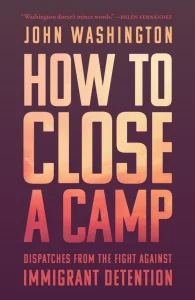 How to Close a Camp by John Washington (July 21, Haymarket) chronicles the background of immigrant detention in the US — showing how our criminal and immigration systems have intertwined since the 1980s and made worse after 9/11 — and very strongly argues against it. An investigative journalist, Washington writes of its early history, “Detention was sold as both a law-and-order necessity and an economic opportunity, welding together the racist politics of the drug war with the rise of private prisons. Communities hollowed out by deindustrialization welcomed detention centers as employers of last resort. Local politicians who couldn’t secure new factories or union jobs instead competed for prisons and INS contracts.” How to Close a Camp is urgently written and full of organizing wisdom. I hope this book is one of the award winners for 2026.
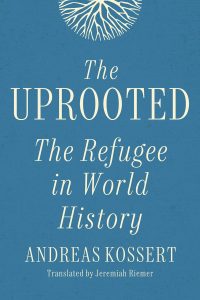 Looking a little more historically and academically, The Uprooted: The Refugee in World History by Andreas Kossert (Oct 13, Rutgers University Press) places refugees in a larger historical context. Starting after World War II, Kossert intersperses personal accounts to illustrate this relatively new movement. A researcher in Berlin and professor at Middlebury College, Kossert writes about this cycle of “uprootedness” and belonging as “a vicious circle in refugees’ lives: What means home, where is home and, finally, where do I belong?”
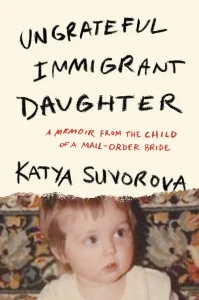 There are some really devastating and creative memoirs this year that discuss the authors’ experiences as immigrants in this country. Katya Suvorova’s Ungrateful Immigrant Daughter: A Memoir From the Child of a Mail-Order Bride (Sept 29, Alcove Press) surprised me in its equally sharp and hilarious voice. It is one of the few books I read for this list that had me genuinely laugh out loud – before very quickly staring into space as I processed the gut punch of what I had just read. The author has been chronicling pieces of her story in devastating social media posts, the photos of tiny Katya and their captions packing a gut punch that will surely inspire you to pick up her memoir.
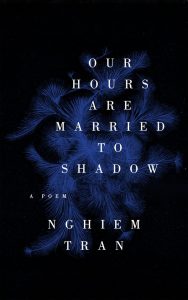 Charting similarly devastating territory but in poetry, Our Hours Are Married to Shadow (Dec 8, Coffeehouse Press) is writer Nghiem Tran’s book-length poem about a volatile relationship between two queer Vietnamese immigrants in the US. I devoured the collection in a day and cannot stop thinking about it. I know poetry is a harder intellectual sell than doomscrolling, but Tran’s work resonates on such a deeply personal level, that your Tiktoks will be easily forgotten.
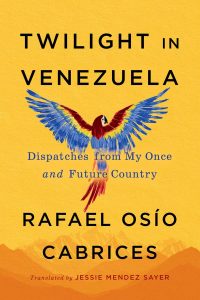
When thinking about immigration to the US, you have to consider the push-pull factors that contribute to it. Unsurprisingly, there are a lot of works out this year about the history and current experience in Haiti, Afghanistan, Ukraine, and Iran, to name a few, and help make sense of why someone from that country would seek refuge in the US. A small sample of those: Twilight in Venezuela by Rafael Osío Cabrices (Oct 6, Algonquin, translated by Jessie Mendez Sayer) chronicles the country’s turbulent history from a former Caracas journalist.
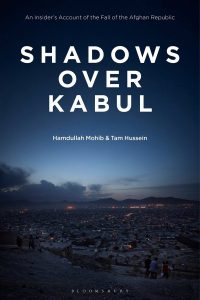 Shadows over Kabul by Hamdullah Mohib and Tam Hussein (Sept 17, Bloomsbury) details the fall of Kabul to the Taliban in 2021. I also loved the 2025 collection Hair on Fire: Afghan Women Poets (Two Lines Press), which translated five women’s work from Dari to English and highlighted their experiences in war-torn Afghanistan and in the diaspora.
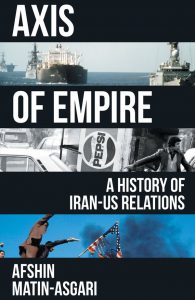 Verso published a history of US-Iranian relations, Axis of Empire (Jan 20) by the Iranian-born scholar Afshin Matin-Asgari. Published in January, it was perfectly timed to be a primer for the war that has simmered since February. Matin-Asgari was extremely prescient about the military and diplomatic back-and-forth between the two countries this year.
And, with the World Cup in the Americas this year — not least because Haiti were actually, despite all the odds, here in the US and playing — I loved reading Dimitry Elias Léger’s Death of the Soccer God (May 12, Farrar, Straus and Giroux). It’s a truly wild historical fiction about a Haitian immigrant’s ride to the 1950 World Cup and beyond.

You May Also Like
-
 December 31, 2024
 -
 August 1, 2025
 -
 September 21, 2020
