
Unexpected Gems From the New York Film Festival
From avant-garde documentaries to restored classics, the festival’s deepest cuts were among its finest.
This is definitely a complaint in the realm of “steak too juicy, lobster too buttery” but sometimes the New York Film Festival feels too long. As you near the end of the festival’s two-week stint at the famed Lincoln Center, it’s easy to feel like — for the last fortnight — the only two places you’ve been are your home and the corner of 65th and Broadway.
Every time I feel this way, I remember that, even despite the rain, there are far worse ways to spend two weeks, especially when you’re dealing with a film festival as seasoned and well-curated as NYFF. It’s difficult (but not impossible) to find bad movies in the lineup, and while the festival hosts tons of prestigious New York, American, and world premieres of the fall’s most anticipated flicks, the magic for me is always in the lineup’s underbelly. The festival’s “Currents” lineup, dedicated to experimental and avant-garde cinema, and its “Revivals” lineup, focused on restorations of under-seen works, are both consistently fantastic. This year, they didn’t disappoint.

One of my favorite films of the festival, experimental filmmaker Tiffany Sia’s Overt Listening is a captivating multimodal documentary about the historical importance of the Kinmen archipelago, which played a major role in the Chinese Civil War. Sia blends picturesque footage of Kinmen’s quiet landscapes with text cards explaining the region’s significance and its role in China’s and Taiwan’s history of conflict. In the film’s second half, she also explores Western pop culture’s influence in Chinese society, including a captivating story about English band Wham!’s first concert in China. The storytelling’s minimalist style won’t appeal to all, but I found Sia’s approach fascinating and unforgettable, juxtaposing the environment’s beauty with the devastating nature of its history.
Similarly reflective (though in quite different ways), I admired Luise Donschen’s Tomorrow a Long Time Ago more than I enjoyed it during the film’s brief 91-minute runtime. The plot is extremely simple: In 1990s (and recently unified) Germany, a middle-aged woman loses her job at a factory, has an affair with a young man, and walks into the woods, leaving all of her possessions behind. There’s some temporal mischief at play, particularly in the film’s more meditative, experimental second half, but perhaps unsurprisingly, time travel doesn’t weave into its story in a science-fictional way. Instead, the film uses these elements to present a unique look at Germany’s complicated history in the late 20th century and its enduring effects. Though clichéd to say, I haven’t quite seen anything like it before.

In my opinion, French documentarian Éric Baudelaire is one of the most underrated working documentary filmmakers working, especially given how he captures youth life in a way that doesn’t feel stilted, top-down, or stereotypical. His newest film, For the Moon, captures the best of his qualities. The film’s premise is simple: Baudelaire gives videocameras to students at the National Institute for Blind Youth in Paris, and lets them capture their lives, daily routines, and hobbies. What results is a documentary that is intimate and expansive at the same time, and a bittersweet story of life’s beauties and hardships told by the subjects, rather than about them. It’s a bold documentary but a remarkably simple one as well, with unfussy editing, well-composed messages, and lots to think about after the film’s 88 minutes fly by.
My revivals journey at the festival was short but memorable. I caught In Which Annie Gives It Those Ones (1989), Pradip Krishen’s film based on a screenplay by famed Indian author Arundhati Roy.
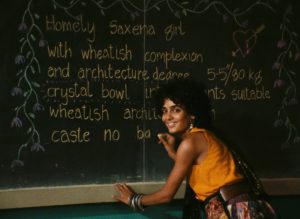
The film’s plot is straightforward, following a group of architecture students trying to make it through the unforgiving world of graduate school — and particularly a school where professors are resistant to change or to any student who breaks from convention. At the center of the group of students the film depicts is Annie (Arjun Raina), a student who has failed his classes repeatedly; hopefully, this will be the year he graduates. Despite the film’s narrative, Roy’s script is so observational and focused on depicting Annie’s environment, rather than his individual struggles, that the film often feels more like a documentary than fiction, capturing the complicated lives of its central characters, which might feel mundane or ordinary to some. The film addresses academia’s inherent inability to change with the times in a way that feels unique and well-addressed, and the film’s punk perspective on rebelling against academia (even in the smallest of ways) is surprisingly attuned to the current moment.
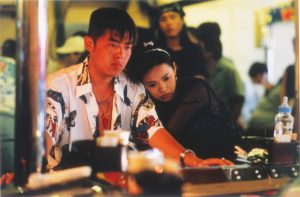
Finally, Goodbye South, Goodbye (1996) is one of Taiwanese master Hou Hsiao-hsien‘s lesser-known works, known for films like Flowers of Shanghai and The Assassin. The film follows a group of friends in rural Taiwan who scheme to make more money and improve their socioeconomic status. The story operates in Sisyphean fashion: with every scheme the characters involve themselves in, there’s a blind hope it’ll elevate them, followed by a crushing realization that it won’t. Hou’s film combines these broad themes with an intimate look at the volatility of friendship (and romantic connection) within a system that rewards, yet suppresses, ambition. Plus, like any one of the director’s works, it is formally astonishing, with some of the best tracking shots I’ve seen in recent memory — especially when it comes to depicting cars and trains traveling,
You May Also Like
-
 October 15, 2025
 -
 October 16, 2023
 -

