
But ‘Who is Martin Mull?’
A star-studded meditation on mortality is also very funny
A star studded meditation on mortality, fame and pursuing — or not — your real passion: That’s the surprising composition of a new documentary on the life of pioneering 70s sensation Martin Mull. An absurdist comedian/musician/actor and comfy furniture aficionado best known, if at all, for Fernwood 2 Night and The History of White People in America, Mull is the subject of a retrospective directed by Bob Saget and Neil Berkeley.
No less an authority on innovative comedy and stage performance than the enduring Steve Martin — who early in his career briefly shared a stage with Mull in their wonderfully titled “The Steve Martin Mull Show” rated Mull’s act as “completely different than any other comedian” and Mull himself as a rare one of one — “as unique a person as I have ever seen.”
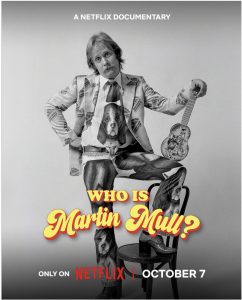 But here’s the twist, Who is Martin Mull? is not just a documentary about an overtly tremendously successful man who shone brilliantly and then almost passively receded. It’s about Mull’s decades long but little-known battle to balance his real passion and identity as a serious painter with the siren lure of easy money and empty calorie attention the entertainment world can proffer.
Who is Martin Mull? is, like its subject, alternatively and sometimes simultaneously meditative, deeply intelligent, intriguingly artistic, full of delightful surprises and very funny.
It’s fascinating to watch as the musician side gig the young Mull took on for “beer money” and “girls” as a promising Masters in Fine Arts student at the august Rhode Island School of Design (RISD) little by little swallows his future as a serious painter and the price he would pay. (Spoiler alert! It involves alcoholism and ambivalence.)
It all started when cash-strapped art student Mull reportedly looking for a way to meet women made the fateful decision to borrow his younger brother’s guitar. Fascinatingly, Mull whose early successes occurred entirely within the music industry, according to this sibling, did “nothing musical till he went to college.” No matter. Six months later Mull was fronting a band called “Soop.” The money and the ladies followed.
According to an old band mate, his pal “Marty” first morphed into his droll Martin Mull persona during a coffee house gig when “something happened,” the stage equipment malfunctioned, and Mull started effortlessly ad-libbing. Later Mull would add his shift towards musical comedy was motivated by the fact he was “a shitty singer.”
Graduating with his Masters in Fine Arts Mull soon discovered “painting was not going to pay the bills.” So it was throughout the early 1970s Mull had to rely even more on his music. To make matters worse, the record companies “hated” it. They didn’t see the market for the gleeful subversion of traditional song writing conventions that pervaded Mull’s best work such as the gem “They Never Met.”
Early Mull collaborator and fellow iconoclast musician Tom Waits, described Mull’s mid 70s vibe as like some sort of “strange friend of your parents” cloaked in this deceptively bland conservative exterior yet saying all these very subversive, very funny things.
A key development in Mull’s career came when he realized his casual, low-key sets for friends in his living room ensconced in a favorite heavily upholstered armchair and bolstered by a cigarette and a glass of scotch were inevitably superior to his paid performances. From that moment forward Mull’s thrift store aesthetic front room furniture joined him on stage. It worked. Mull became known as “the sit down comic” as opposed to — the other kind. His band was renamed “The Fabulous Furniture.” The ascent began.
Mull’s observations on how these developments impacted his growing addictions are insightful. He bought into the romance of the smoker/drinker/artist persona prevalent in the era. He also recognized the essential calming function those necessary props provided. Before each performance Mull thought “I’m not going out there alone. I will have my drink and my cigarettes.”
It was a heady time. Comedy albums were king. Mull and his furniture soon became a sought after act. He opened for Billy Joel and Bruce Springsteen and toured with Monty Python. Eric Idle makes a welcome appearance sharing how much fun the British boys had on their US tour and how much of that was due to Mull’s very much of the time sex, drugs, and rock and roll approach to touring. Mull released five full length albums between 1972 and 1975.
In an audacious act of self promotion intended to help make the jump from rising music star to broader entertainment world Mull rented Los Angeles’ The Roxy Theatre then distributed free tickets to Hollywood’s most influential players to see his act. Sitting among the curious glittering good and great, television sitcom production icon Norman Lear was struck by Mull’s unique style of “wickedly smart” sarcasm that contained no hint of “anger or hostility”. Another partnership was born.
A few quick meetings and the germ of what would become Mull’s greatest commercial success, the fake small market talk show, the legendary in comic circles Fernwood 2 Night was born.
Barth Gimble, Fernwood’s main character brilliantly captured Mull’s signature simultaneously sly, smarmy, sardonic, subversive blink-and-you-miss-it, smooth-as-his-double-knit-polyester-suits wit. The big market talk show host temporarily sidelined in agonizingly nowheresville Fernwood was Mull’s role of a lifetime. It paired him with young improvisational genius Fred Willard. Willard’s dim witted local boy sidekick Jerry Hubbard seamlessly melded with Mull’s smug condescending Barth Gimble birthing one of the great comic collaborations of the era.
With transgressive segments like “Talk to a Jew” parodying the country’s ignorance of other faiths and sometimes too close for comfort examination of small town peccadilloes, critics called Fernwood tasteless. But many, including fellow RISD graduate Seth Macfarlane now laud the show as “ahead of its time”. It was. Fernwood’s hyper real, earnest improvised deadpan satire would inspire generations of comedic minds. Its DNA can be found in everything from The Larry Sanders Show to Christopher Guest’s big screen popular mockumentaries.
The driven Mull continued to tour while the TV show was on. He made regular appearances on peak monoculture institution, The Tonight Show and became a favorite of host Johnny Carson, the Pope of standup comedy. In a mark of Carson’s admiration Mull would guest host the Tonight Show over thirty times.
In the midst of all this professional success Mull’s personal life “cratered.” He was in an ill-advised “miserable” second marriage and in his own words was a “functional alcoholic”.
The documentary masterfully traces how Mull’s own internal conflicts and unresolved childhood trauma contributed to the cratering. Then tracks how Mull in the early 80s bolstered by a new supportive relationship with Wrecking Crew caliber keyboardist and singer Wendy Haas let go of fame and refocused on his art. All of which led to a slow unmourned show biz decline into sometimes memorable, pay-the-rent supporting roles and cameos in films and programs like Clue (1985), Roseanne, Arrested Development, and Two and a Half Men balanced by a surprising late life recognition as the serious painter he always wanted to be.
Affirming stuff to be sure. However, be warned. A lot of the people associated with this documentary die during production, director Saget and Mull included. But that is another wonder of this film. It squarely faces the mortality of its subject and so many who came to celebrate him.
Months before his death the now-reorganised production comes back to capture Mull’s reaction to Saget and Willard’s deaths.
Ensconced in a comfortable chair in his living room the older Mull did not disappoint:
“There are times when I feel like… the opera is over. The actors and singers have left the stage. The set’s been taken down, a new set for an opera that I don’t understand has been put up. And for some reason, I’m still sitting there in the chair. And I should have been gone with all that stuff, and I’m not. And… I think about that.”
Asked to look back on his life Mull opines “I was given every opportunity. I took a few of them and I had a really good time.”
Less innovative film makers would have left it at that. Berkeley chose not to. Months after Mull’s death, the crew returns to the house he was so proud of now “a ghost town” and his rock and wife of 42 years Wendy. She takes them to his beloved studio — a now empty room she has not entered since he died.
She says she misses “hearing him.”
You May Also Like
-
 October 17, 2018
-

-
 August 7, 2025
