
Since When Did It Become A Crime To Be a Jewish Writer?
PEN’S latest scandal should be the final wakeup call
When I started my career as a writer nearly 35 years ago, it was acceptable to be Jewish. In fact, it was nearly a requirement. You could easily excuse the over-representation; after a near-extermination, we went on a generational hot streak and produced some of the most important and essential fiction and nonfiction in American history. By the time I truly entered the fray in 2000, that streak was in its waning days, but I still got to hop off the bench and enjoy its benefits.
If I came along now, it wouldn’t just be difficult for me to enjoy the early-career success into which I stumbled; it would be impossible. I’d like to say that my career in big publishing, which began to crumble during the second Obama Administration, happened because of antisemitism. It didn’t. There were other factors at play that I don’t need to elucidate here. Regardless, I can’t claim to have the victim of some sort of bigotry — unless it was bigotry against stoned weirdoes. But I also know that if I were ever to attempt to breach those literary walls again, I’d have less chance than the average college sophomore. For Jewish writers young and old, the doors to the temple of literature appear to be closed.
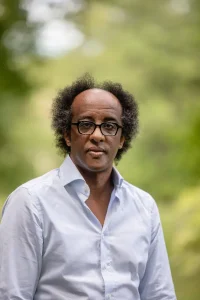
Take as example A the platonic ideal of the literary attitude toward Jews today: the recent resignation of Ethiopian-American novelist Dinaw Mengetsu as president of PEN America. Mengetsu took over when PEN’s membership demanded the resignation of Suzanne Nossel because she was too soft on the Israel-Hamas conflict. She liked Israel too much. Yes, there is a logical gap there: the 10 years she grew PEN by showing care and diligence for all writers everywhere next to a perceived friendliness to a single foreign country over which she has no influence.
But then her replacement Mengetsu quit because PEN America had the temerity to issue a report called “A Silent Moratorium,” talking about the deep antisemitism in the writing industries. It cited cultural boycotts, active discrimination against Israeli writers — including dissidents — and non-Israeli Jewish writers, as well as an overall chilling effect against Jews as a whole in publishing. Writers reported losing book deals, getting dropped by their agents, getting “review bombed” on Amazon, and other forms of discrimination hard and soft. Here, I’ll quote from the report directly:
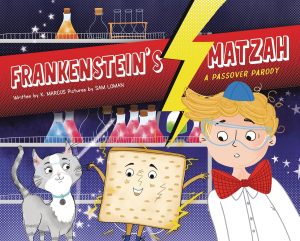
When children’s author K. Marcus posted a Facebook ad for her new picture book, Frankenstein’s Matzah: A Passover Parody, it was targeted with comments accusing Jews of supporting genocide. Marcus is American and the book is about a child who brings passover matzah to life. “I’m pro Jewish joy. You know, I’m a children’s book writer,” she said.
According to the former President of PEN, we must save the world from the scourge of books like “Frankenstein’s Matzah.” Imagine that you’re the head of a literary organization that purports to speak out on behalf of oppressed writers everywhere. And then imagine that a writer of a Jewish-themed book for children receives a deluge of antisemitic hate. Your organization then dares to mention that such hate exists. And then you resign in protest? What could possibly evoke such a response? It’s not hard to connect the dots.
Writers and literary careerists, it won’t surprise you to learn, live largely on the progressive left of the political spectrum. And the progressive left has spent the last three years absorbing a fire-hose of Hamas propaganda that has left them susceptible to subtle and overt forms of Jew-hate, whether they know it or not. They say they’re just protesting the Netanyahu government. Sure, Jan.
Sally Rooney, representing Ireland, the most antisemitic country in the Western Hemisphere, has been speaking out against Israel for many years, refusing to allow Israeli readers to consume her work in Hebrew, depriving them of the stories of the ultimate bard of millennial romantic angst. Rooney basically disavows Israel’s right to exist, which I take issue with, to say the least. But now the blanket of detestation from writers like Rooney and Mengestu covers American Jews who’ve never mentioned Israel, Jews who actively oppose the Netanyahu government, and Israeli dissident filmmakers and writers. The brush has gotten much broader over the years.
It takes a lot of nerve to accuse Jews – Jews!–the most genocided-against people in human history, of genocide. And yet here we have an entire literary community that toes such a line. Hamas, the PLO, and Iran, the leading proponents of anti-Jewish hate in our time, have been trying to sell this blood libel for decades, even as they’ve sworn to wipe Israel and all Jews off the map. Their efforts since October 7 have proven so successful that writers all over the world are suddenly, effectively, and somewhat unanimously amplifying their concerns.
 It’s important to remember that being a “writer” doesn’t mean having good politics or, apparently, even thinking clearly. American literary figures a thousand times more accomplished than the ones spouting anti-Jewish hate today did yeoman’s work covering up the crimes of Josef Stalin in the 1930s because they desperately wanted Communism to work. And now that myopia is back. Just because someone is a “writer” doesn’t mean they’re smart or immune from prejudice. There’s no reason why the literary world can’t be a hive of anti-Jewish hate.
If that’s what being a writer means then I’d rather do anything else for a living. I might not have a choice. That said, I don’t want to give up so easily, and neither should other writers who find this trend disturbing. There are still a lot of Jews in and around publishing, and more and more of them are waking up to a world that doesn’t want them around. We have our voices, and we’ll use them, though maybe not until after a nice lunch. Mengestu, and other literary haters like him, may discover that they’ve awakened Frankenstein’s matzah.
You May Also Like
-
 November 26, 2020
 -
 May 7, 2021
 -
 March 7, 2022
