
Witnessing North Korea
Two new books offer firsthand explanations for how we got to this point
Publishing is a fickle industry, and there’s seldom any guarantee that books will actually come out in an environment where their subject matter is at all relevant. Witness to North Korea and the upcoming Miss Kathi: Saving Lives in North Korea, however, have been unusually fortunate in this regard, as August was the month where President Trump decided seemingly out of nowhere that rapprochement is back on the table. Consequently, books from on-the-ground aid coordinators in the pre-COVID era when Western assistance was still an ongoing calculation in the North Korean government’s policy, are quite welcome as we try to see what exactly went wrong.
Kathi Zellweger’s text is the far more complete history of the two, starting as it does in 1995 when the private aid organization Caritas was the main international entity pushing for relief in regard to the famine most commonly known as The Arduous March. Today, the Arduous March is virtually the only fact about North Korea nearly anyone knows about despite the fact that it ended in 1999. So it’s more than a little remarkable that in Zellweger’s history of this time period, she often struggled to get donors to believe that it was happening at all. As the public face of the private aid campaign, she also inadvertently served to guarantee the permanence of this narrative, giving truth to the fear of North Korean authorities that aggressive lobbying for aid would be seen internationally as a form of weakness.
Miss Kathi: Saving Lives in North Korea
Kathie Zellweger and Mike Chinoy
Post Hill Press; 384 pages
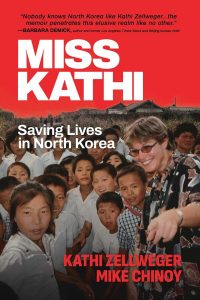 Zellweger establishes early an important distinction between North Korea and other food aid recipients in that the North Korean government is still intact. The vast majority of the other aid work Zellweger engaged in prior to North Korea, as well as during her 24-year history in that region, was in countries without stable governments. On paper this should have helped her, since aid workers could reasonably be certain of their safety. In practice, the North Korean government’s general paranoia about allowing any foreigner unrestricted movement (particularly since even normal North Korea citizens don’t have unrestricted movement), and Western paranoia about aid supplies going to a disagreeable political regime greatly complicated whether aid could actually reach those in need.
Witness to North Korea
Jerome Sauvage and Paul French
Bloomsbury Academic; 200 pages
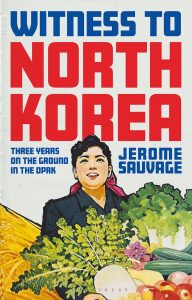 The irony of an audit-based approach, as explained by Zellweger, is that in less stable countries there often wasn’t even a pretense that aid could be realistically tracked. Sometimes they’d literally just airdrop food supplies in a famine-afflicted area and hope for the best. Zellweger’s discussion of Bush-era nitpicking over missing funds takes an especially dark irony in the present day, where the Trump administration’s notoriously swingeing USAID cuts that have caused tens of thousands of deaths across the world, were premised on almost identical logic, just on a much larger scale.
Zellweger’s political position— namely, that she was no fan of the North Korean regime but saw little reason to antagonize them — is humanitarian in its outlook, though it’s never that simple. She can’t morally justify any policy that enables child malnutrition, and she can’t socially justify any policy that leads to less direct engagement with North Korean people because every person she spoke to, whether normal citizen or government functionary, came away from their talks with Zellweger having a more optimistic, positive outlook toward the West at large and her home country Switzerland in particular.
Hope that the Obama era would lead to more political progress is where Jerome Sauvage’s story starts. He describes 2009 – 2013 as featuring a lot less hope and change than you might expect, particularly since this time period also saw the changeover from Kim Jong-il to Kim Jong-un as the leader of North Korea. As with Zellweger, Sauvage’s most interesting and noteworthy stories are the often fickle and on-the-spot reactions he seems to provoke from intermediaries. When Sauvage asks that his wife also receive a visa, for example, he meets resistance, but proudly declares that in 25 years he has never separated from her and won’t start now. Sauvage suspects that the North Korean need for the United Nations Development Program is the reason for North Korean officials backing down. Although, having already ready much of Miss Kathi, I found myself wondering whether these particular North Koreans were merely impressed by his sincere strength of will.

Both books do an exceptional job of emphasizing that North Korean people are just people. They are not, in most cases, that inscrutable or difficult to understand. Sometimes it’s genuinely weird, like a hospital being unable to engage in renovations because Kim Il-sung visited once, and there’s literally a map of red dots depicting every room he stepped in that can’t be messed with. Other times, explanations are remarkably mundane. North Koreans really like reusing things, for example, so decent quality bags from Caritas or the United Nations Development Program or any other organization could end up all over the country once emptied of their contents just because people use them to move other things.
The main observation connecting Zellweger’s and Sauavage’s texts — an on-the-ground reality anyone who seems to have spent a decent amount of time in North Korea has noticed — is North Korea’s great pride in self-reliance and feeling of shame at the indignity of having to take aid in the first place. The Kaesong Industrial Region is presented in both books as a point of North Korean pride because not only did it allow for a fair exchange of goods, services, and hard currency, but also for genuine cultural interchange. But, as happens more often than you’d think, international political pressure, rather than any particular hostility from the North Korean government itself, put an end to that particular experiment.
The main limitation of both of these narratives is that, while they’re quite a bit more modern than the perpetually starving North Korean stereotype that predominates pop culture, they’re still rooted far enough in the past that they can’t really tell us much about the country as it exists today, it can only confirm that those stereotypes weren’t particularly helpful or accurate even when they were more accurate. That article I linked in the first paragraph almost begrudgingly has to acknowledge that North Korea today is in the midst of a boom cycle. And this boom cycle wasn’t thanks to any particular reform or the North Korean people after all this time suddenly managing to lift themselves up by their bootstraps.
No, what happened was that the West started putting sanctions on Russia over the invasion of Ukraine. The sanctions were so similar to those applied to North Korea that there was no longer any meaningful penalty for Russia trading with North Korea. It’s ironic and sad to read Zellweger and Sauvage’s often enthusiastic depictions of aid in the form of sharing better fish farming techniques or mountain cultivation, while also having to think about the loopholes that prevented certain bureaucrats from complaining about this technology exchange. To become mores self-sufficient, North Korea always wanted fertilizer more than food, but since fertilizer could be used to make bombs, western allies nixed it. But now Russia just gives North Korea material to make bombs directly.
Zellweger and Sauvage’s narratives read bittersweetly like that. What they were doing seemed to be working. Or at least, seemed to be leading to a better place than where we are today. With some cause, Kim Jong-un doesn’t seem to believe Trump’s promises of rapprochement are sincere, but that is just the latest distraction from helping the nation. Earning the trust of the North Korean government and people was never, as Zellweger and Sauvage argue in these memoirs, as impossible as the North Korea watchers seemed to believe.
You May Also Like
-
 January 30, 2020
 -
 February 19, 2019
 -


William – Thanks for the review. One thing that you might want to double-check is your assertion that DPRK is in the middle of a boom. Pyongyang is. We need to be careful with North Korea: there is no data whatsoever, indicating that the majority of the population is getting any of the cash obtained from trading with and sending weapons and soldiers to Russia.
Another thing is you might want to read again are my descriptions of places actually visited and where so few other foreigners went. Those of did visit tell me that my book’s descriptions make them feel back there again.
Anyway, thanks for your review. You are my first! Cheers, Jerome Sauvage
Hi Jerome. Glad you liked the review, bit of a surprise I was the first! This is a fair caveat about the boom only verifiably being seen in Pyongyang. You and Miss Kathi both noted that conditions were worse in the rural areas, and I did appreciate how those descriptions focused as much on the energy of the people as the geography itself, as the two can’t be easily separated.