
Huo Mong’s ‘Living the Land’ Revisits a 1990s Chinese Countryside
Award-winning farming nostalgia harvests minimal sentiment
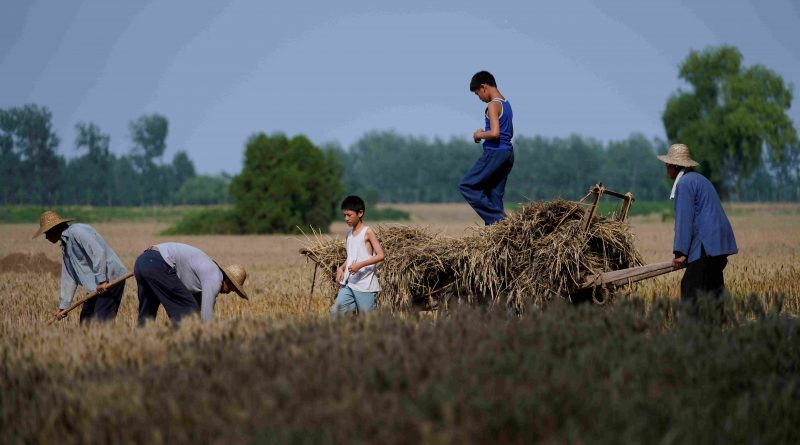
With the United States approaching year 11 of the Trump era, it’s easy to be nostalgic for a simpler time. The situation in China is a bit stranger. The Chinese government not only has strong domestic approval ratings, but they just leapfrogged the United States in global approval ratings too. It’s from this perspective that Living the Land makes its debut in the United States, the 2025 Chinese drama having earned a Silver Bear at Berlin last year. Director Huo Meng’s depiction of rural Henan province in 1991 is pastoral, but not romantic. The date is crucial, placing it two years after the Tiananmen Square protests and right ahead of the massive development of neighboring Shenzhen into a production center and industrial zone.
Of course, young Xu Chuang (Wang Shang), knows nothing of this, nor do most of the adults in his daily life. They live simple, pastoral lives. They gossip about the possibility of gigantic American tractors that could greatly improve their harvest yields. They work to obscure or confuse familial relations when government officials come by to conduct a census, since the one child policy is now in effect, although as we can see, it’s not enforced all that zealously.
If there’s any one defining element to Living the Land, it’s the lack of zealotry. There are no aggressive references to shared culture or political events, with local community gossip about farming conditions and social relationships making up the bulk of the dialog. The greater vibe of the film was remarkably similar, to me at least, of remembering what it was like to visit my grandparents on their farm when I was a kid. I paid about as much attention to my grandfather listening to the soybean prices on his transistor radio every day as Chuang does to the chit-chat around him, resulting in a general blur of daily life that, especially through a child’s eyes, can make it hard to know what’s going on.
Living the Land ★★★ (3/5 stars)
Directed by: Huo Meng
Written by: Huo Meng
Starring: Wang Shang, Zhang Chuwen, Zhang Yanrong
Running time: 132 minutes
The movie is a snapshot of life, and there isn’t much storyline. Indeed, the closest we get to a plot is with Xiuying (Zhang Yanrong), whose exact relationship with Chuang is vague but tends to function as a maternal figure. Zhang Yanrong plays her role with a constant sense of ominous dread, mainly because she’s at about the age that it’s time to be married, and there’s not really any way of getting out of it. There’s no melodrama or rage. We barely even know anything about the man Xiuying is marrying until he shows up on-screen. This obfuscation is as much a function of Chuang’s childish ignorance as it is the traditionally styled marriage culture still common in Henan at that time.
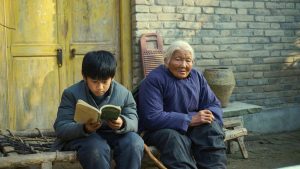
Huo Meng’s camera neither indicts this society, nor does it romanticize it. The documentary-like framing largely serves to simply present a world that’s largely now disappeared. Of course, even a deliberately non-political framing is ultimately political. Huo Meng is making the argument that these people were a product of their time and their culture, and while for the most part they enjoyed their lives, they openly acknowledge that they could possibly have better ones.
Living the Land plays off like a bittersweet memory and will frustrate anyone trying to actually understand modern China or its values through this quiet, meditative look at the past. Its influence in China proper should also not be overstated. As far as I can tell, Living the Land has yet to receive a formal theatrical release there despite its fame. As is often the case for more artistic releases aimed at the international festival circuit, Living the Land presents an argument aimed as much at us foreigners as it does to Chinese people familiar with the rural tropes it describes. Namely, that revolution need not be destructive for either people or political parties that can live and let live, looking at the quiet dignity of life a day at a time.
You May Also Like
-
 February 24, 2021
 -
 November 1, 2018
 -
 January 17, 2023
