
The End of a Neighborhood Restaurant Feels Like a Divorce
‘Orna and Ella’ is personal, for documentarian Tomer Heymann
My grandfather and his business partner worked together for 50 happy years until their retirement. For most of the second half of the twentieth century they would also meet up on weekends to go and watch sports events and occasionally for social occasions with wives — they were also married to their wives for over 50 years each. Most long relationships though, face strain and difficulties well before their half century.
Orna and Ella ★★★★ (4/5 stars)
Directed by: Tomer Heymann
Written by: Tomer Heymann
Starring: Orna and Ella
Running time: 54 mins
In Orna and Ella, documentarian Tomer Heymann traces the end of a 26-year business relationship between the eponymous Orna Agmon and Ella Shine — the owners and chefs at a beloved neighborhood restaurant of that name in Tel Aviv. Over the years it provided a home from home for many people who came to eat there, as well as those who worked for the couple.
The project is personal for the accomplished filmmaker Heymann who worked there as a waiter for 6 years. As a gay man he was drawn to a business owned by, as he believed, two lesbian women. That seems to be both a misapprehension and also more true than the facts. The two women were passionately involved in each others lives, but there is no actual evidence of romance in the film. Indeed, as the film outlines, Orna and Ella were both with men (Roee and Amit respectively) for significant moments of their lives.
 More significantly than any romance, though, the restaurant (originally a bakery) that yoked together their lives, was a marriage and its closing: a divorce. As a going concern, and a successful business, it makes no sense to close it from a capitalist perspective or — from a sweat equity perspective — at the very least sell it to someone who can maintain it. But neither of the women really see it as a business.
Like many marriages, the partners have very different feelings about its status and dissolution. Talking to Heymann, Orna avows she hates the restaurant and has hated its daily hold on her for years at its closing. Ella, for her part, can hardly see it ending. As Orna — the more private of the two — notices, the customers are all Ella’s “children” that she has a compulsion to feed. Ella thinks of the restaurant as the father to replace hers who died young.
At 54 minutes, this is barely feature length and — though compelling — it feels like Heymann’s love for the subjects makes him pull some punches. As the film is currently composed, it seems like the two women have come to a relatively amicable separation, agreeing to disagree in the same way that they are filmed disagreeing about the lead time that the waiters would need for an event. That is certainly a possibility but it is convenient for Heymann who is friends with both and, even if true, not deeply examined.
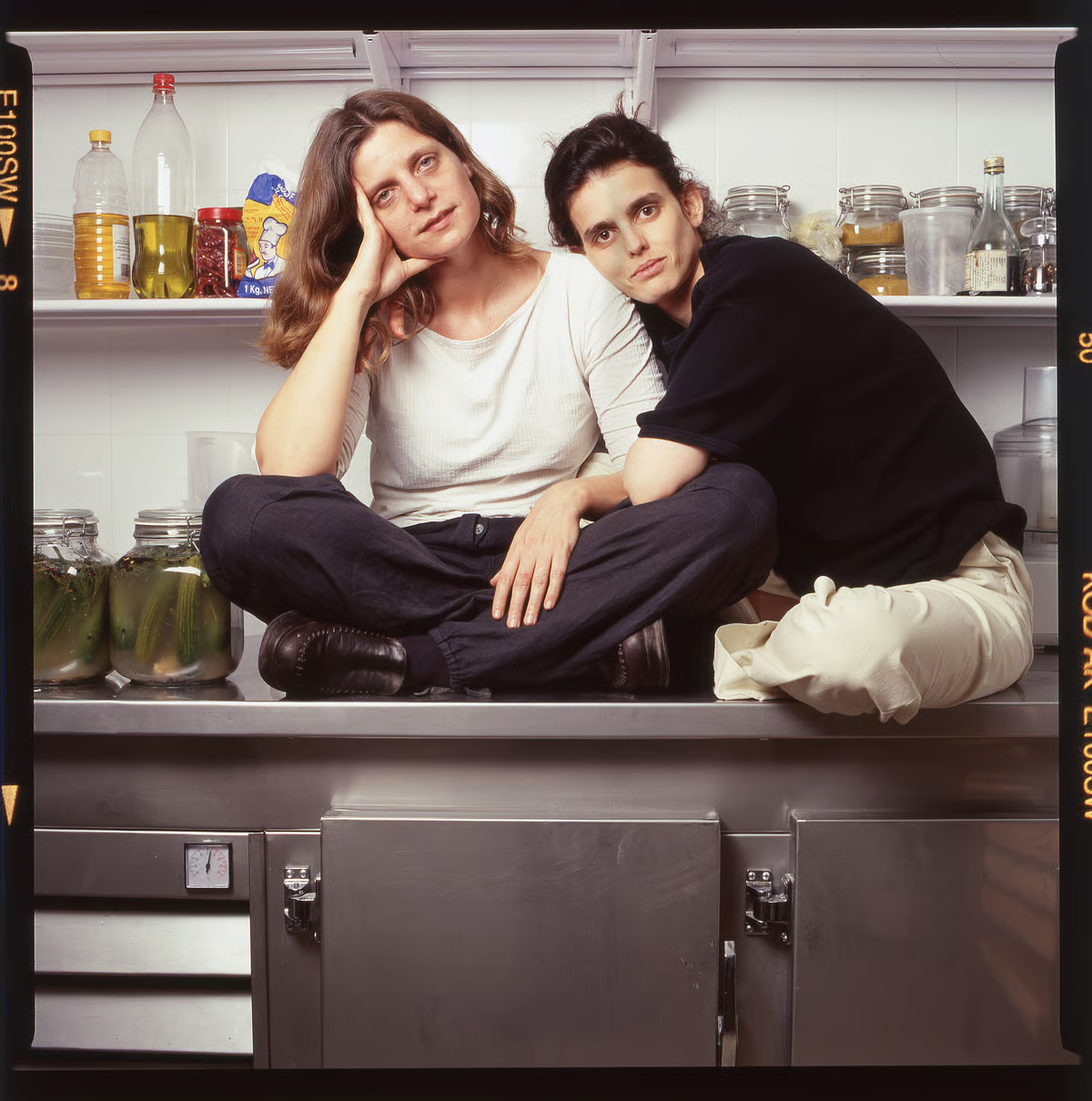 Less forgivably, the film lacks some exposition between the founding story — complete with early 90s photos and footage — and the final week of the restaurant. Orna’s Heymann’s role itself is awkwardly composed, veering between the confessional “it was here I came out,” observational, and — when Hillel (Orna’s son) asks him for a job now that he is no longer employed by the restaurant — contemporary family friend.
Though we see and feel the outpouring of love for the restaurant as it approaches and reaches its final day, the film does not quite capture the previous 20 years and what it had meant to the neighbourhood. There is a massive queue for the doors to open for the final breakfast but almost none of the guests are interviewed, neither are the staff. Heymann touches upon how Orna has a clearly conflicted relationship to food and to Ella but chooses not to follow through.
There are obligatory cooking shots which are excellent because of the sheer variety of foods that the couple make. They baked their own bread, they made their own pasta, they construct their own stews and felafels. In the end, Heymann’s evocation of the warm savor of the kitchen and the fascinating bond that created Orna and Ella leaves the consumer of the film, like the patron of the restaurant, wanting more.
You May Also Like
-
 November 11, 2019
 -
 October 7, 2021
 -
 January 15, 2019
