
‘Rocky’ at 50: ‘Going The Distance’ Chronicles the Making of a Classic Movie
Philadelphia’s own Mike Sielski goes deep into the roots of Sylvester Stallone’s low-budget masterpiece
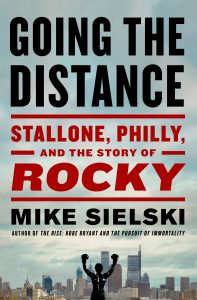
Half a century ago, a low-budget film conquered the world. Rocky, starring an unknown and a cast of little-knowns, overcame the odds to become a box-office juggernaut and critical darling. Rocky, a character study of an unremarkable but affable boxer, Rocky Balboa, went on to win three Academy awards and spawn countless sequels. It’s arguably the most inspirational movie ever made. At a press screening, it prompted New York Magazine editor Clay Felker to stand up and shout encouragement to Rocky during the climactic fight scene. With audiences around the world, it struck a similar chord. Now the original is being re-released in theaters alongside the hagiographic I Play Rocky, while — in a more substantive review of the movie’s origins — Philadelphia Inquirer sports columnist Mike Sielski chronicles the development and birth of this classic in his new book. Going the Distance: Stallone, Philly and the Story of Rocky.
Going the Distance: Stallone, Philly, and the Story of Rocky
By Mike Sielski
St. Martin’s Press; 320 pages
Despite the fact that most of Rocky’s main players are sadly no longer with us, Sielski delivers a fun, compelling read, especially for Rocky fans. In a breezy manner, he goes through every phase of the project, from Rocky author and star Sylvester Stallone’s troubled childhood and actor salad days to the actual nuts and bolts of making the film. Sielski also commits pages to the Philly’s boxing history and the tragic demise of boxing manager and trainer Howie Steindler, the inspiration for actor Burgess’s Meredith’s iconic character.
He sifts through a small-library’s worth of archives and lands just enough fresh to make it work. Unlike I Play Rocky — with which he is not at all affiliated — Stallone, Rocky’s author and star, participates, albeit reluctantly, answering some of Sielski’s queries via email. No doubt Stallone wanted to save his best stuff for his memoir, The Steps: A Memoir. Rocky producer Irwin Winkler, composer Bill Conti, supporting actor and boxing technical advisor Jimmy Gambina, among others, were much more accommodating. Gambina has a lot to say about Butkus, Stallone’s beloved Bullmastiff who appears in the movie.
 When he was starting out, Stallone wasn’t being flooded with acting offers, to say the least. His resume even included a terrible softcore porno. However, he did land a role as greaser Stanley Rosiello in the 1974 The Lords of Flatbush, which Henry Winkler co-starred in. Eventually, Stallone took matters into his own hands – by writing. He’d hole up in his hovel with cheap wine and churn out scripts, longhand. His then wife, Sasha, would type up pages. When Stallone came up with Rocky, he was already getting some interest on a screenplay called Hell’s Kitchen, (which eventually became Paradise Alley). But when he watched a journeyman boxer named Chuck, “The Bayonne Bleeder” Bleeder go fifteen rounds with heavyweight champion Muhammad Ali, he was truly inspired. Rocky is about a journeyman boxer fighting to prove his value, and that he’s worthy of love. Rocky’s not so hidden secret: It’s a love story posing as a fight film. Spoiler: there are only two fights in the film.
Producers Winkler and Robert Chartoff secured the film’s funding, about $1 million, from United Artists. The studio preferred an A-lister for the title role, and they attempted to pay off Stallone – how much exactly is in dispute – to step aside, but Stallone wouldn’t budge. Rocky was his shot. With a relatively low budget, UA went ahead and rolled the dice. If the film bombed, little lost.
Rocky was Stallone’s calling card, but it was far from a one-man show. The supporting cast is stellar. Burt Young, a successful boxer in the marines, was the only member of the cast that didn’t audition. Young dosed himself in alcohol and wore extra layers for his Paulie character. The rest of the supporting cast members were backup choices. At one juncture Bette Midler was considered for Adrian — Rocky’s love interest. Boxer Ken Norton removed himself from the running to play Rocky nemesis Apollo Creed to participate in the television show, The Superstars. Carl Weathers, who played Creed, just happened to be in his agent’s office when the Rocky producers called. For his audition, Weathers stripped off his shirt, and Stallone followed suit. The tension was immediate, visceral.

One of Weather’s exes, Jennifer Peterson, who Sielski interviews, contends that the actors were respectful of one another but not friends. Before Rocky, composer Bill Conti, was composing student films… for free. And then there’s the movie’s uncredited hero. Author Ray Bradbury, who producer Winkler invited to an unfinished-version screening at a USC film class, suggested a more uplifting, romantic ending at an early screening. Without Bradbury’s crucial note, Rocky’s ending is much more solemn.
Rocky is forever identified with the City of Brotherly Love where Stallone grew up. However, it shot only five days in Philadelphia, and those were done on the sly to avoid the wrath of the expensive teamsters which the production could not afford. When Stallone called The Spectrum to use the venue, they blew him off. Ultimately, The LA Sports Arena and the Olympic Auditorium stood in. The ice skating rink scene, with Rocky and Adrian’s unforgettable first date, was actually shot in Santa Monica.
Stallone’s original script called for a herd of skaters. However the production’s meager budget would not permit, so the extras got the heave ho. Ultimately, in this case, less is more.
It’s a beautiful movie and a personal one for Stallone. Like the fictional Balboa, he felt unloved. In his youth, Stallone was placed in foster care, and he ran away to Florida at one point. Eventually, Stallone wound up at a draconian school for troubled kids. Sielski covers all this background and more.
Fifty years after its release, Rocky still brings audiences to their feet, and Going The Distance is a worthy tribute.
You May Also Like
-
 June 8, 2021
-

-
 November 23, 2018
