
Venice Crowns ‘Woman Unknown’
May El-Toukhy takes the Golden Lion as class, power and inequality dominate the festival
This past weekend, the Venice Film Festival awarded its Golden Lion to the searing period film Woman Unknown — giving its top prize to Danish-Egyptian writer-director May El-Toukhy, the only solo female filmmaker in a competition dominated almost completely by men.
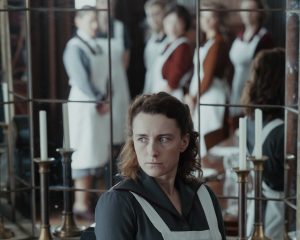
“To me, personally, Woman Unknown is about the female body as a battleground in a public manner,” said El-Toukhy as she accepted her leonine statuette to wide applause in the Sala Grande. “And at the same time, the film tells the tale of women who are invisible, unseen, and voiceless.”
The quietly harrowing postwar drama, set in a 1945 Denmark freshy scarred from Nazi occupation, focuses on a housemaid (Mathilde Arcel) currently engaged to her wealthy widower employer, but who once had a little-known conjugal relationship with a German solider. And she is determined to keep that secret hidden, especially at a time when women who slept with the enemy are dragged into the public square and slut-shamed — their heads shorn, their clothes ripped open, their bodies painted with swastikas.
“Thank you to the jury for this great honor,” she said, turning to Jury President Maggie Gyllenhaal and her fellow jurors. “And to you, Maggie, for especially using your voice in shining a light on the lack of equal opportunities for female filmmakers in our industry.”
El-Toukhy also dedicated the win to her teenage daughter. “Compassion, community, and courage, darling,” she said. “Those are the things you’ll need to finish what me and generations before us started. Get off your damn phone, look up, use your voice to speak up against dehumanization, use your voice to speak for those who have been abandoned and silenced.”
Woman Unknown was the only film this year to be awarded multiple times, also winning Arcel the Best Actress prize. “This is my first lead role in a movie, my first time at a festival and my first time getting an acting prize,” said Arcel with a stunned smile. “I would pinch myself. But if it’s a dream, I really don’t want to wake up.”
Nabbing the Best Actor Prize, to no one’s surprise, was John Malkovich, for his hilariously acidic portrayal of a jaded CIA agent in Martin McDonagh’s Wild Horse Nine. The legendary actor had left Venice a week earlier to receive a tribute at the Telluride Film Festival before going to a film shoot in Montreal, so he delivered his acceptance speech in a prerecorded video message. “Thank you, Martin McDonagh, for writing this lovely screenplay and for your superb directing of it, and for gifting me with this fantastic role,” he said in his famously measured tone, an uninflected voice full of droll authority.
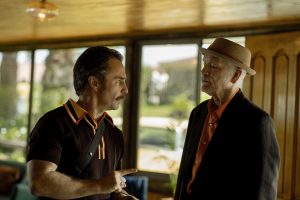
The Special Jury Prize went to Yuval Abraham and Rachel Szor’s devastating exposé NAZA, in which two dozen repentant members of the Israeli Defense Forces outline in sobering detail the methodical extremes they have taken to wipe out tens of thousands of Palestinian civilians in Gaza. “People are attacking this film, denying it, without even seeing it,” said Abraham, who added that six Palestinian girls have been killed in the week since the festival began.
Possible Love won the Grand Jury Prize, and writer-director Lee Chang-dong used the platform to amplify the film’s bitter message about the schism between rich and poor amid the ever-shifting role of factory workers. “We are living in an era where the meaning of labor is fading and human connections are increasingly becoming severed,” he said. “I made this film to ask what cinema can and should do in times like these. I take this award as a sign that you want me to keep asking these questions.”
Also exploring that tension was Best Screenplay winner A Good Little Soldier, Stephane Brizé’s bitterly funny and deliciously awkward workplace drama starring Alba Rohrwacher as a put-upon HR executive struggling to market her company as both a place that cares for its employees and also one that pushes them to high-achieving extremes.
The dichotomy between the haves and the have-nots continued to play out repeatedly over a slew of movies this week. It’s present in the French vineyards of Burgundy, Michael Dweck and Gregory Kershaw’s wry but knowing look at the moneyed landowners perpetuating a storied wine culture and gatekeeping it from a striving underclass desperate to climb into that elite world. And it pervades the coastal Maine shipyards in Luke Lorentzen’s entrancing Boatbuilders, documenting callused woodworkers who tenderly assemble yachts with an astounding level of craftsmanship for millionaires blithely oblivious to the long hours and brutal wages that went into their sea baubles.
Self-destructive impulses fueled by moral compromise pervaded a handful of fiction films, too. Just look at the insatiable appetite of real-life pedophile-hunting (and fame-seeking) TV journalist Chris Hansen (a reptilian Robert Pattinson) in the luridly sensationalistic Primetime. Or the breathtakingly selfish devastation that a wealthy socialite wife (Jasmine Trinca) wreaks on her husband and children in the stylishly wicked Faustian-bargain satire The Spiral.
The political purity of the worker and the decadence of the rich, the psychological ways in which the strong exploit the weak, the sensuality of passion and the austerity of self-denial — all those heady themes were showcased in Luca Guadiagnino’s Joie de Vivre, his loving, indulgent, delightful marathon documentary on Oscar-winning Italian filmmaker Bernardo Bertolucci.
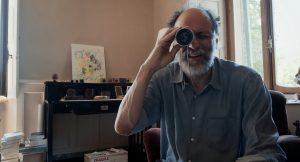
Unfolding over a luxurious seven and a half hours, and overtly aimed at a Millennial and Gen-Z audience, the film uses interviews with critics, academics, historians, actors, and fellow filmmakers to revive the essential legacy of the ambitious auteur who fused Hollywood style with Marxist politics and Freudian theory — from his dazzling antifascist fable The Conformist to the controversial sexual oblivion of Last Tango in Paris, from the sprawling Italian epic 1900 to the humanist masterpiece The Last Emperor.
Guadagnino dissects each of his major works, giving a few other later films inexplicably short shrift (Stealing Beauty and The Dreamers are some of the casualties) but overall painting a portrait of a fascinating artist constantly struggling with the most enduring contradictions and complexities of the human condition. A U.S. release is not yet secured; hopefully an intrepid distributor or streaming service will make room for this monumental work.
