It’s Time To Play the Music, It’s Time to Light the Lights
‘The Muppet Show’ is back, for one show only
While The Muppets are pop culture icons, they have done little to burnish their reputation since the latter half of the twentieth century, back when puppets were huge TV draws. Since Disney acquired the franchise back in 2004, they’ve struggled to use the intellectual property. To be fair, The Muppet Show of 1979-1985 was a surprisingly broad success and encouraged a series of solid family films that don’t invite obvious sequels. In response to the rebooting of everything, though, Disney has just released a one episode revival of The Muppet Show that seems like an unsubtle attempt at a backdoor pilot for a full reboot.
Such piloting is already a throwback idea in a modern media market where some of the stupidest ideas imaginable are greenlit into television series and feature films on the basis of vestigial IP. Just look at Hasbro still trying to reboot He-Man, undeterred by previous failures. There’s already another stupid controversy attached to it.
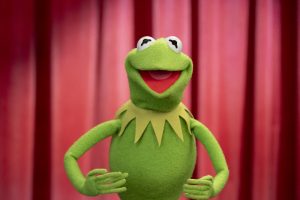
The Muppet Show — re-launched nominally in commemoration of its 50th anniversary — rather impressively manages to work its contingent status explicitly into this earnest pitch for a full series. Kermit is recognizable as the lovable frog emcee he always was, and is surprisingly down-to-earth in explicitly hoping that the muppets might be able to make more shows like this one if the one-off goes well. Which, of course, it doesn’t. The Muppet Show works as a hopelessly comic pastiche of ’70s variety shows, which were a staple at that time but — absent the big awards shows – are mostly gone from the modern media environment. Kermit tries his best to keep things moving backstage and it’s a coin flip whether any given sketch goes as planned or runs into some horrible disaster.
Disney’s coyness about ordering a full series makes some sense given that The Muppet Show really shouldn’t work as a concept anymore. There’s no pretense of a high concept epic plot, just a series of loosely related skits, many of which feature guest stars you may not recognize. The original Muppet Show aged much better than its variety show models, though, because the muppets lend themselves to broad slapstick that excites children from ages 5 to 90, in a way that The Lawrence Welk Show never could. You don’t really need to know anything about Sabrina Carpenter to laugh at her singing while kicking small rampaging muppets out of her way.
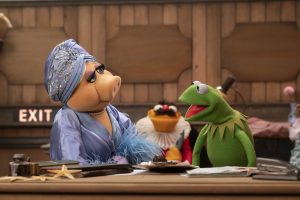
The Muppet Show is also surprisingly modest about its own pedigree. There isn’t any of the self-aware cringe that made its 2015 attempt at a reboot so unwatchable. When Carpenter gushes about her childhood relationship with the muppets, there’s a sort of weird edge to it that’s self-parody, but only in relation to Carpenter herself. Kermit acts exactly as you’d expect, politely listening while still worrying about how he’s going to salvage the show. Miss Piggy also acts exactly as you’d expect — the role of diva has not changed dramatically since The Muppets began to lampoon it. She excitedly laps up Carpenter’s flattery right up until the moment she realizes that Carpenter is inadvertently calling attention to the fact that her character is, at this point, over 50 years old.
This pilot of The Muppet Show works by wrapping the vaudeville stylings of the original around to meet the tone of the present era. Short musical skits and abrupt punchlines are more-or-less the appeal of TikTok, and much like a good TikTok, it doesn’t take very long to figure out, for example, Gonzo’s deal even if you’ve never heard of the character. In an era where Netflix executives require superfluous exposition throughout projects since they assume everyone is just watching TV on background anyway, the structure of The Muppet Show is intuitive: deliberately built entirely around layered slapstick, gags, and absurd feats of muppetry that flow into one another such that it’s somehow both continuous and changing.
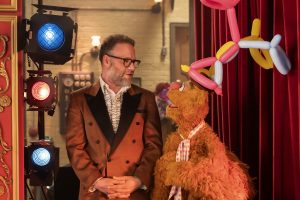
Executive producer and guest star Seth Rogen has a great line in here that really nails the ethos of the project, grumpily wondering why his bit was cut while a character who clearly isn’t a part of the muppet A-list “canon” got in. The Muppet Show isn’t really about the cultural importance of the muppets, but rather the limited world of the title characters while they’re trying to get some work done. Much like last year’s King of the Hill reboot, The Muppet Show would feel right at home as the autoplaying sixth season from where it left off with the fifth season finale over 40 years ago. In this case, the achievement is even more impressive because the gap of a full generation means that many showrunners and production members are terminally unavailable.
It probably helps that Tony-winning director Alex Timbers, probably best known for Bloody Bloody Andrew Jackson, is playing the real-life Kermit role behin d the scenes. To be true to the spirit of the muppets, it’s not enough to just be someone who loved the muppets as a kid. You have to know backstage chaos well enough to be able to reproduce it authentically, see the humor in it, and set it to musical rhythm in addition to comedic rhythm. Whether or notThe Muppet Show gets the full series order it’s clearly hoping for, they all put on one heck of a show here in their real-life bid to save the stage company.
You May Also Like
-
 August 12, 2020
 -
 October 16, 2020
 -
 June 3, 2022