
Nobel-Winner’s New Novel Finds Freedom in Isolation — and the Lie Beneath It
Peter Handke turns inward again with his late career ‘The Ballad of the Last Guest’
82-year-old Nobel Prize winning author Peter Handke’s haunting novel The Ballad of the Last Guest may never reach readers who can’t forgive Handke for his ongoing support for what once was Slobodan Milosevic’s brutal Serbian regime, but those able to look past this bizarre transgression will be gifted with another masterful work by an author whose imaginative forays into the intricacies of the wounded human mind are unmatched. Both Handke’s father and stepfather fought for the Wehrmacht during the Second World War and his mother killed herself at 51 after a lifetime of unhappiness. Handke has spoken of the tender stories his mother, who was from Slovenia, would tell him about her childhood home. Slovenia was once united with Serbia and one senses Handke’s inexplicable feelings about Serbia might possibly be irrationally tied to thoughts of his mother’s birthplace being desecrated, a warped projection of sorts.
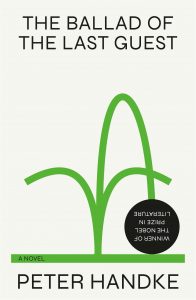
The Ballad of the Last Guest: A Novel
By Peter Handke
Translated by Krishna Winston
Publisher Farrar, Straus and Giroux; 175 pages
His new novel is autobiographical in tone as are many of Handke’s novels. In a penetrating third-person narration we are thrust into the mind of Gregor who is returning home from somewhere very far away. We are witness to his thoughts as he embarks on the last leg of his journey home. We hear no mention of any woman or children he has left behind; we sense he has been alone for a very long time; perhaps always. Gregor seems to feel proud of the solitude he has found traveling around the world making “one-man exhibitions” wherever he pleases, rarely engaging with anyone. Right before arriving home, he learns his brother has been killed fighting for the Foreign Legion but seems to swallow this news whole and place it elsewhere. At the bus station, some townspeople seem to recognize him, but Gregor doesn’t slow his step to allow any sort of exchange.
 The core drama of Handke’s novel lies within the vortex of Gregor’s fraught birth family whom he is visiting as he does once a year. They are a joyless bunch, filled with some sort of generic dread, and leave the presents he has brought unopened. We learn the family’s rules soon enough. No one dares to ask anyone else any questions. Affection is in short supply. We readers want to know what all this means. When did it begin? What was the genesis of all this quiet sorrow? Was there ever love present? We can only hear Gregor’s impressions and have no idea what the others are thinking; he is our only conduit to the world. And at times we are not sure we trust him. Once he arrives home, Gregor handles the discomfort of their presence by coming and going as he pleases; unable to spend much time with them. No one questions his frequent departures or asks where he is going. It seems this has been his way for longer than any of them can remember.
The writing takes on a hallucinatory quality as we follow Gregor on various adventures through his old hometown. We sense at times how draining it can be for Gregor to keep certain thoughts at bay, particularly those about his little brother whom he used to take care of. But Gregor was always determined to keep himself steady and focused on disappearing; an art he had perfected in the same way one masters any sort of craft. He would blend seamlessly into the countryside and become invisible; even to himself.
Even as a young man, he “could lose his way again from time to time, and anew. He even made that happen, losing his way on purpose, paradoxical though that may sound, as part of a plan. The blind alleys he sought out, which had him sometimes crawling on his stomach, on all fours, or, as in child’s play, rolling down a scary slope, grounded and structured in his one-man undertakings, and subsequently, enhanced with the photos and drawings, determined the form his chronicle of each misadventure took.” Handke allows us to see how Gregor is hopelessly lost in an endless echo chamber of his making; one where he has deceived himself into believing loneliness is an art form, rather than an aberration. Handke shows us the pleasure Gregor takes in his freedom insisting he doesn’t miss the messiness of human connection. Instead, Handke’s ‘Gregor’ extols the happiness implicit in having no nagging obligations to fulfill for anyone else. He is the captain of his world as well as the master of his fate. The Earth’s beautiful landscapes have become the playground from which he draws sustenance. When he longs for the human voice; the chatter of the birds suffices.
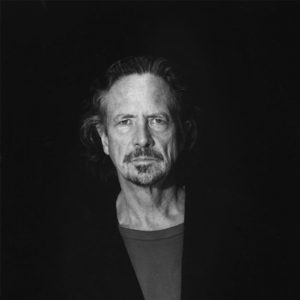
Handke’s writing is lush, often digressive, and yet somehow tempered by his need to remain in tight control. There is a sense of undeniable longing and vulnerability swimming about beneath the text that begs for Handke’s attention, but he’s become too accustomed to shut out such pleas. We watch Handke do so again here through Gregor’s restless wanderings. One can’t help thinking about Gregor and Peter Handke; two sides of the same beat-up coin; trapped in some sort of time loop that was set long ago. Shadows of shame from the history of Handke’s ancestors seem to be at play here. So does Handke’s mother’s suicide and helplessness. It’s easy to understand Handke’s protagonist’s desire to take flight; as well as his wish to grab the reins of his own destiny and not allow any kind of interference. But endless travel and random rash movements only really allow the illusion of freedom and inner liberation. It has a tyranny and blindness all its own. Handke seems stuck inside this deception.
You May Also Like
-
 August 10, 2023
 -

-
 January 10, 2023

Long time reader, but proly not this 1.