
How Should We Read Edna O’Brien?
Tributes pour in for one the greatest Irish writers, who died on July 27. What do they leave out?
Since the death on July 27 of the Irish novelist, short story writer, poet, playwright, and memoirist Edna O’Brien at age 93, many of the tributes in newspapers and magazines have dwelt on her iconoclasm nearly as much as her vast talent. They have made her out to be a renegade who sought to free readers from the straightjackets they had to wear under the sectarian order that prevailed in that part of the world where O’Brien came of age. Terms such as “patriarchy” and “conservative” come up in not a few of these portraits.
What the obituarists leave out is equally telling. O’Brien was indeed a brave writer who told the truth as she saw it, whether her subject was tensions in an outwardly sleepy County Clare village, a tryst between highly educated Londoners, the war between the IRA and British counterterror units, or the fate of schoolgirls abducted by jihadists in Nigeria.
But she undermined dogmas of the left as well as the right. When a writer of O’Brien’s stature dies, the last thing we want to happen is for critics to shoehorn her ideas and themes into an ideology or agenda, especially one that the author herself opposed.
Praise for an Iconoclast
In a fulsome tribute, the Irish Examiner’s Marjorie Brennan quotes one of O’Brien’s terse self-characterizations: “I’m a good fighter. I stay the course. . . . My books are very ferocious, though the language is well wrought.”
In a paean in The Guardian, Ed Vulliamy quotes a comment that O’Brien reportedly made to the literary critic Dawn Miranda Sherratt-Bado: “I am a savage writer with a savage eye. I write about the things we are not supposed to speak about.”
Adrian Higgins in the Washington Post stresses that O’Brien’s outlier status was in part a function of content in her books that did not sit well with officials in the County Clare where O’Brien grew up or in other devoutly Catholic areas. She wrote about sexuality, repression, power dynamics, and yearnings to be free of any relationship or order that rammed people, with all their oddities, idiosyncrasies, needs, and longings, into preconceived molds.
Higgins notes that The Guardian could have also quoted a remark that O’Brien made to the same newspaper in a 1965 interview: “I believe that mental disturbance by literature is a healthy and invigorating thing. We have plenty of comfortable and easy prose all around us, but it’s by abrasion that people’s prejudices are aroused.” (Emphasis added.)
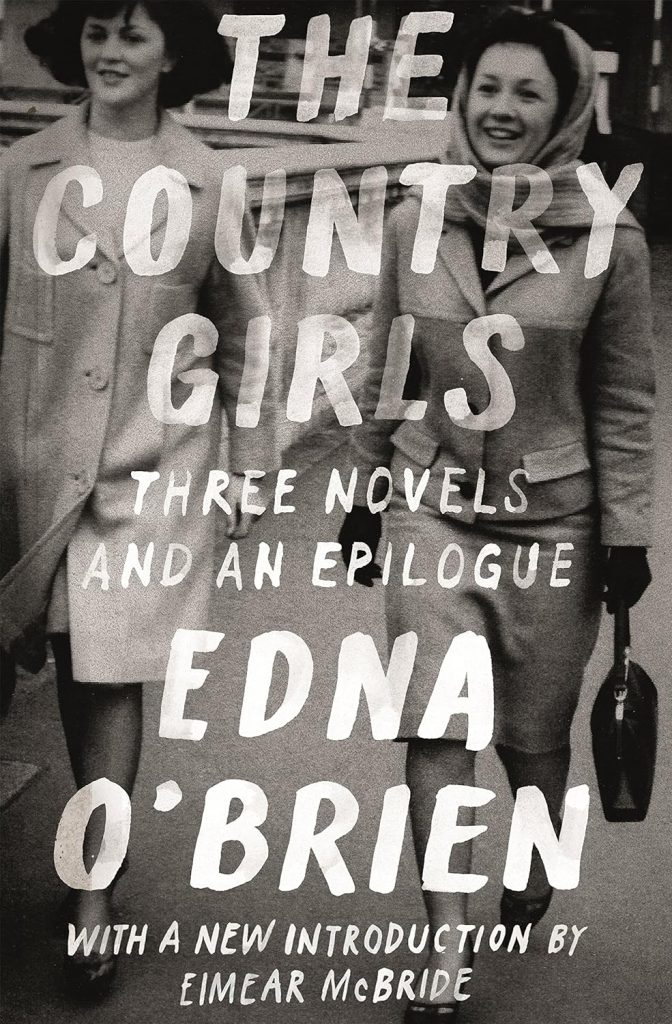
These are all apt descriptions. The author of such novels as The Country Girls, Girls in Their Married Bliss, August Is a Wicked Month, Time and Tide, House of Splendid Isolation, Down By the River, and many fine story collections and memoirs held a radically different view of the role of writing and literature from the one that is increasingly prevalent in academia and the cultural establishment.
Books that preach to the choir, assuage egos, tell people what they want to hear, and studiously avoid giving offense or causing unease might as well not exist. They are not worth the trees that died to bring them into the world.
The tendencies evident in O’Brien’s novels emerge in a distilled form in many of her wonderful short stories. “Savages,” which appeared in the New Yorker in 1982, is about a small town in the west of Ireland that eagerly awaits the return of a woman named Mabel who has spent many years in Australia. Upon her arrival, she becomes the center of attention and exhibits a promiscuity that she naively thought would be as acceptable in this sternly religious place as in the frontier society where she had so many wild adventures. When Mabel gets pregnant, people shun her. When she loses the child, the reality of the adage damned if you do, damned if you don’t hits home.
O’Brien knew full well that some people would not like “Savages” and its seditious portrayal of the ways of a Catholic community where the pressure to mask one’s needs and desires is intense. But what some critics have missed is the author’s tendency to find pressure to conform everywhere, even and especially in more secular, supposedly enlightened settings.
Just look at another of her New Yorker pieces, “The Love Object,” whose publication antedated that of “Savages” by fifteen years. It is the first-person account of a woman who begins a long, emotionally fraught affair with a married man. She is a television announcer and he is a lawyer, and they live in the worldly, progressive London of the late 1960s. Yet the theme that emerges in passage after passage is the need to play a game and keep up a façade while your real desires must seek fulfillment in bits of time stolen here and there, in a tiny apartment far from the settings of your public life.
Contemporary Spin
Critics like Adrian Higgins in the Washington Post do not show much interest in the complexities of O’Brien’s worldview or the lived-in quality of her fiction. They project their narrow ideologies onto this unique oracle.
At the start of his Washington Post piece, Higgins hits you over the head with a characterization of O’Brien as an author who “portrayed young women struggling for happiness and freedom in a male-dominated world.”
This opening makes O’Brien out to be a committed feminist writer, and the rest of the article hammers the point home. Higgins has not done his homework. In a fascinating and wide-ranging Paris Review interview, O’Brien bluntly expressed her belief in the wholly distinct natures of men and women and her disagreement with the views and agenda of feminism.
O’Brien discussed what she sees as the contrasting approaches of men and women to writing and the creative process writ large. This prompts the interviewer to ask, “So you don’t believe in the feminist argument that the differences between men and women are a question of nurture and not of nature; that women look at the world differently because they have been conditioned to do so?”
To which O’Brien replies, “Not in the least! I believe that we are fundamentally, biologically, and therefore psychologically different. I am not like any man I have ever met, ever.”
She goes on to add, “A lot of things have been said by feminists about equality, about liberation, but not all of these things are gospel truth. They are opinions the way my books are opinions, nothing more.”
Apart from his lack of familiarity with O’Brien’s boldly expressed views on feminism, Higgins does not seem even minimally competent to discuss themes in her fiction. Anyone who says that this author wrote about women fighting for freedom and happiness in a male-dominated world has either never read or chosen to ignore O’Brien’s haunting, beautifully written short story “The Creature.” The narrator of this tale befriends an aging widower who lives on a farm in the west of Ireland and who has grown estranged from her son. The reason is that the son has chosen to marry a hyper-aggressive, controlling young woman who makes constant demands on him and does not allow him to have a life of his own. At the end, when the narrator finally succeeds in convincing the son to return to the farm and try to reconcile with his mom, it is like the return of ancient customs and ways of life after the endless winter of fashionable ideologies.
As she acknowledges in the Paris Review interview, O’Brien’s work suffered censorship back home on a relatively modest scale. A parish priest in Limerick encouraged people to dump their copies of The Country Girls on the ground so he could set the blasphemous works ablaze. But the number of books burned was small.
In an age when the earth has not even settled over the graves of writers before the online mobs begin to scream for cancellation and book-burning, we do have to wonder how posterity will treat Edna O’Brien. But some of us will forever remember and reread this masterful stylist and enemy of conformity.
You May Also Like
-
 October 24, 2018
 -
 November 2, 1996
 -
 September 2, 2018
