
‘Backrooms’ Takes Psychological Horror to the Next Level… Of a Building
YouTuber Kane Parsons brings internet creep to Hollywood
Backrooms is the second 2026 horror film in less than a month to showcase a YouTuber new to feature-length directing. Doesn’t sound like a promising trend to be honest — are studios being generous to first-timers or just seeking cheaper work from those eager enough to get it?
YouTubers are used to working with limited budgets, so it’s not a big risk for a studio to give, say, less than a mil to Obsession’s Curry Barker after his promising found-footage debut Milk & Serial went viral the DIY way. If it flopped, no harm no foul. But it couldn’t have won bigger; within weeks worldwide box office projections are now looking at $300 million.
Backrooms ★★★★ (4/5 stars)
Directed by: Kane Parsons
Written by: Will Soodik
Starring: Chiwetel Ejiofor, Renate Reinsve, Mark Duplass, Finn Bennett, Lukita Maxwell
Running time: 110 mins
Its design-heavy concept meant Backrooms, a classic A24 freakshow, had ten times the budget and made $100M in its opening weekend. Director Kane Parsons got the job off the back of his own 20-episode YouTube series on the titular “creepypasta” phenomena but had no previous experience helming something at this scale. Did I mention he was a teenager when A24 entrusted him to film it? He’s now 20.
Parsons and Barker have made two of the most invigorating films of the year, especially for horror, but also for the wider world of cinema. After their outstanding success, studios will surely make lazier moves for less talented YouTubers but that should only magnify, not diminish how far these young directors have knocked their trial pitches out of the park.
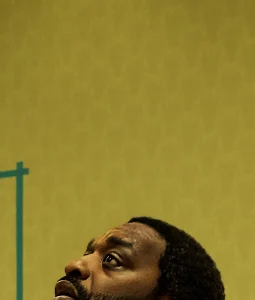
Everything about Backrooms comes from the internet. Besides the director’s pedigree, the concept itself was birthed from 4chan’s spooky division, based on a simple photo uploaded of an empty yellow furniture store with punishing fluorescent lighting. From there, interested parties developed the idea of liminal spaces like hotel lobbies and repetitive hallways forming some kind of otherworldly maze hidden in normal locations, a bizarro world you don’t want to accidentally find yourself in, especially if something terrifying is lurking there.
But the governing idea is that barren department stores are eerie enough in themselves and a nightmare if you get lost, an idea that would never occur during normally crowded business hours.
Great idea for a horror movie, right? Give it the right actors — in this case the two Oscar nominees Chiwetel Ejiofor and Renate Reinsve as a patient and his therapist, respectively — and there’s truly no limit to the possibilities. Slap on an appropriately ambient soundtrack with a Boards of Canada end-credits tune and you can practically envision it already. It’s not that liminal spaces haven’t been explored before, from Twin Peaks’ reality-straddling Black Lodge to Severance’s sterile white offices, but here they take on the leading role. So even though Ejiofor’s Clark, a powder keg of misplaced hostility (and wasted architectural potential, it’s implied), and Reinsve’s Mary, who favors role-play exercises in trying to help him, are fairly excellent, they are still outshone by the movie’s set design.
David Lynch played in this sandbox but never made such a point of touring the space like Parsons. Even the sight of a stop sign out of place indoors (and with backwards text) is enough to fill the viewer with dread. Clark discovers this place behind the basement walls of his own furniture store (for which he also serves as a confusing “pirate sultan” mascot), and the further out he goes, the more psychedelic things get. A pile of furniture in the middle of an otherwise empty room gives way to stranger, increasingly ominous sights: a cardboard cutout of a man that appears wired to some kind of French radio frequency, a dead bird, tiny doors fit for Alice in Wonderland to crawl through, and finally, after suspicions, clear signs that Clark is not alone in this space.
First he tries to tell Mary what he saw, and you can imagine how that goes for an alcoholic (“have you ever 5150’d someone before,” he asks in session), then recruits coworkers Kat (Lukita Maxwell) and Bobby (Finn Bennett) to help explore the place. Then Mary tracks down her patient to the store after believing him missing, and it would do a disservice to the painstaking construction of this film’s set and its attendant narrative to spoil anything after that.
Backrooms is a fun house of distorted memories in both the Eternal Sunshine sense and in Michel Gondry’s sense of visuals, particularly with one outsized papier-mache-looking figure, a continuance of Severance’s playfully disturbing what’s-behind-door-number-three setpieces (and world-mapping, literally with ballpoint pen), and towards a non-ending we knew was coming, a bit of X-Files hazmat-and-flashlights people to study this paranormal activity. It’s that last part that feels so inevitable that even without quite weakening the movie (as scientist Phil, Creep’s Mark Duplass is bloodless as ever), it does feel like the thrills settle down. You can feel Parsons packing up the intensity a tad prematurely so the film can clear the way for the next installment of the Backrooms franchise.
However, that’s still after the craziest and most eventful moment in the entire creeping development of what’s going on, where Clark and Mary find themselves in almost a DALL-E text-to-image AI-generated version of the dinner table climax from the Texas Chainsaw Massacre, except that it is actually constructed from real props, furniture, and actors. One of the most “internet” things about the film at all is this aesthetic, with various objects and beings embedded in the structure’s floors like glitching AI, staircases to nowhere, doors on ceilings, and people disfigured far beyond even the extent of normal misremembered visages.
It’s hard to picture how many more films or shows in this series could maintain the quiet discomfort of Backrooms or interrupt it with shocks, but it was hard to picture this one succeeding in the first place. The excellent Smile 2 descended into psychedelic madness in a way that gives hope to sequels here; horror’s so healthy in 2026 that for once it’s actually believable they’ll keep, if you’ll pardon the pun, topping themselves.
You May Also Like
-
 March 18, 2020
 -
 March 7, 2026
 -
 February 1, 1998
