
Is Maggie O’Farrell’s New Novel ‘Land’ Just Grief Porn?
The ‘Hamnet’ author’s charts Ireland’s history
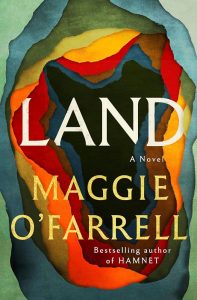
Out last month, Land is the latest novel from Hamnet author Maggie O’Farrell. I’m not going to lie: it was a very challenging book to read and review. O’Farrell chronicles the life of an Irish family following the Great Famine and, through the lens of the land that they cultivate on an unnamed peninsula, zooms out and interweaves, more or less, the entire history of Ireland as it happened in this one spot. And as you can imagine, it is not exactly a happy story.
The novel begins with Tomás, a map maker, who is sent to the windswept western coast of Ireland by the occupying British, as a part of their efforts to survey the famine-ravished country. He is talented both artistically and mathematically, but crucially, he speaks the local language, knows the local people, and – along with fluent English – uses those skills to benefit the British, “as a lapdog of the redcoats.”
Land
By Maggie O’Farrell
Knopf, 400 pages
Tomás brings his adolescent son Liam on one job where the pair encounter a mystical spring, the land around which becomes the setting for the rest of Land. Touched by something ancient in the spring’s copse, Tomás leaves the area a confused, babbling mess, undeterred by medicine or religion to cure what ails him – because the ailment is colonialism.
From then on, Tomás becomes obsessed with creating “a map of how this land really is, of how it has always been, of what lies beneath whatever order or disorder others might impose upon it.” Like some kind of divine revelation, he wants to set down the prehistory of the land to capture something authentic to its people, their language, and the land itself without redcoat intervention. “To map is to assume power,” he tells Liam. Tomás eventually moves Liam and the rest of the family, pregnant wife Phina and daughters Enda and Rose, from their home in Dublin to a cottage near this spring.
Built into these dreams too is the dream of finding his own homeland. Tomás, we learn, was an orphan, who lost his entire family to the famine and, probably as a trauma response, cannot remember anything before his teenage years. He cannot remember where he came from or who his people were, and for the novel’s duration, he searches for the place he can only recall in snippets: “a long, frost-shirred road” that “cut through a V-shaped valley, with high peaks on either side.”
And then, O’Farrell zooms out: “Somewhere in time, a child is climbing up a hollow carved out between two hills.” The child is not Liam; the novel has transported us back in time, telling the story of this sacred land our characters have found, and the people who inhabited it for millenia. The author, essentially, tells the history that Tomás is trying to set down himself in map form — before returning readers to Tomás’ family and learning how this decision to move has changed each of their lives forever.

In The Atlantic, Hillary Kelly characterizes Land as a “joyful tearjerker” that avoids the kneejerk label of “grief porn.” She argues that the beauty of O’Farrell’s work is her weaving anguish into a character’s full life, full of sorrow, joy, and everything in between. Of the film Hamnet, which treads similarly devastating territory, actress Jessie Buckley said in Variety last year, “In ancient times, stories were vessels to help us transcend feelings we couldn’t hold ourselves. We’ve lived in escapism for so long. We want quick distractions, but this film asks us to sit with something deeper…It’s not grief porn; it’s a film about deep love. And if you really love something, you risk losing it.”
As I’ve sat with the novel for a few weeks now, I wonder if I agree: maybe Land is actually grief porn. I read a lot about death and loss, and for me, good writing about grief makes me feel something alongside the writer. We hold up The Year of Magical Thinking, for example, for bringing the reader into Joan Didion’s rawest, most intimate thoughts, and allowing us to relate to them or challenge our own ideas about death. There’s something important in avoiding the escapism that Buckley describes and recognizing the power in setting down something real – to say, “This horrible thing happened to me,” and sharing that for readers to process our own feelings as we go along with you. A grief map, of sorts, to borrow Tomás’ preferred medium.
And Land definitely made me feel. I needed days-long breaks to recover from some of the novel’s more heart-wrenching bits. (I’m looking at you, Brith!) But to what end? Where does all the grief point readers? The inciting moment of this novel – finding the mystical spring – sets each member of this unnamed family down a separate, torturous path. Ultimately, the blame lies with colonialism, which the changed Tomás names every chance he gets.
“This is a country that has attracted wave upon wave of conquerors, those who seek to occupy and enslave, but now I alone see how we can resist,” he tells young Liam at the height of his post-spring mania.
There are similarities between the powerlessness of the colonized and of the grieving. Tomás is recording the land as an act of resistance, like Didion’s naming her grief is hers. O’Farrell’s entire work is a map of the various conquerors and illnesses that have ravaged Ireland over the centuries. Readers are handed this tangible record of Irish resilience and resistance, and asked to offer our heartbreak in exchange.
 What holds me back from fully denying the “grief porn” label is the sheer amount of story we get in Land. This is not just the journey of a mapmaker who, ultimately, cannot realize his unattainable dream when he loses his hand on his final contract with the redcoats. Phina and Tomás have a really incredible origin story as orphans, but I found her to be a flat character with an early death. We have to contend with Liam’s blind devotion and eventual disillusionment with the Catholic Church; Enda’s escaping to Canada for a better life; Rose’s attempts to hold the family together after Phina’s death; and baby Eugene’s silent perception and deep connection to the land.
Each story has no shortage of tragedy, and by the novel’s end, Rose has been raped, Enda is single and pregnant, Eugene has become the boogeyman living in the copse, and Liam bounces from one colonial system to another by leaving his post as a Jesuit in India and working for the very same redcoats as his father in Ireland. The siblings, spread out across different countries and continents, never see their father again and are never reunited as a unit, save for Rose and Enda as a pair. Like the history of Ireland we get at the outset of Land, we get another generation of wanderers, new people to shape the land – new to them, but ultimately constant, as generations of people come and go. And like child Tomás’ forgetting of his family and home, we never learn this family’s last name; their story is just another blip in the forever history of the land. Their anonymity, the senseless suffering, doesn’t make Land feel like an empowering, but a disempowering. There is power in recording one’s grief, but it is hard to feel that way when such tragedy is set against the entire history of Ireland, which continues on, indifferent to the highs and lows of the individual.
Perhaps I am just not made of strong stuff. But I don’t find the same joy that Kelly does in Land and or the same closure as I did when reading Hamnet or watching its adaptation. When Buckley’s Agnes smiles at that film’s end, there’s catharsis; I know that her suffering has led to one of the greatest works of the English language. Her grief has not only been set down in words and shared with the world, but it is beloved. At the end of Hamnet, I felt a surprising joy; at the end of Land, I felt alone.
I will hold onto Tomás. I love the anti-colonial epiphany and the ways it carries him through the rest of the novel. Though he loses his hand and cannot draw or survey anymore, readers learn that he is found dead, curled up as if asleep in “a valley surrounded by high hills, I’m told, with a lough running through it. A beautiful place, by all accounts.” I hope that one part of his dream was realized, and that knowledge feels the same as Agnes’ smile to me – catharsis, nestled in a novel of so much tragedy.
My feelings about the characters’ sad lives are totally distinct from O’Farrell’s writing, which is gorgeous and merits all of the awards and praise she won for Hamnet. This is an incredibly inventive novel, where O’Farrell is really playing with form and perspective, and when I wasn’t crying, I enjoyed it on a technical level. Each sentence feels like it was created in a lab to wring the most out of each image. Land is an absolutely gorgeous read.
I’ll leave you here with a favorite moment: Liam first encountering the copse and the spring.
The quality of light in the copse is immediately different, verdant and lustrous, glimmering with the trembling of the leaf canopy. The wind vanishes, as does the relentless rain. He is enclosed and enfolded, as if he has stepped inside the secret greenhouse of a giant. Liam looks up: the tops of trees separate and collide in the breeze, revealing and concealing the opaline sky. He sees the arrowhead leaves of an aspen entangling with the ripple-edge foliage of an oak, bending together like conspirators. Underfoot, the ground is spongy with damp. It oozes from the soil, the leaf-rot; it sucks and grips at his boot soles. He glances down and sees that there is thick, luxuriant moss, glistening and emerald-bright, blanketing everything: the humps of stones, the long cylinders of fallen branches, the ridged splay of roots, unidentifiable mounds that suggest loaves of bread or animal lairs. Or tiny graves.
You May Also Like
-
 May 13, 2019
 -
 September 30, 2024
 -
 October 15, 2018
