
This May Be the Sir Paul McCartney Book We’ve Been Waiting For
‘The Story of a Band on the Run’ tells all, from the Beatles’ breakup to flying high with Wings
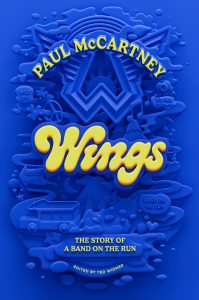
Forget for a moment about whether it’s even any good (Spoiler alert: It is.), Wings: The Story of a Band on the Run is empirically necessary. After all, both of Paul McCartney’s bands lasted for about the same amount of time, each one indelibly inserted loads of songs into the public cultural consciousness, and they both made millions of rabid fans across the globe. But when it comes to the number of Beatles biographies vs. books about Wings, the ratio is roughly a squillion to one.
And this is that one.
Wings: The Story of a Band on the Run
By Paul McCartney with Ted Widmer
Liveright/W.W. Norton; 576 pages
Fortunately, this first-ever fully authorized Wings book draws straight from the source — a series of exhaustive interviews with McCartney that will also be used for the upcoming documentary Man on the Run (due out February 2026). Editor Ted Widmer intertwined them with commentary from a raft of other key players including the other Beatles and Wings members; McCartney’s daughters, who grew up amid the traveling Wings circus; and plenty more, assembling an oral history that runs from the end of The Beatles all the way through the lifespan of Wings.
 We get Paul’s personal take on the fractious farce of The Beatles’ death throes, with the band and everyone in their orbit tippy-toeing around the elephant in the room and nobody wanting to take the blame for breaking up the planet’s favorite band. (Unenviably, McCartney eventually felt he had no choice but to sue the rest of the Fabs in order to prevent shifty new manager Allen Klein from taking control of things.)
Paul and Linda’s post-Beatles retreat to their remote patch of Scottish farmland paints a sweet picture of the couple’s humble domestic beginnings. It’s hilariously endearing when McCartney goes into greater detail about building a wooden table by himself than he does about writing any of his songs. It’s easy to forget that he was so young — barely 27 when The Beatles broke up.
The ramshackle, low-tech beginnings of Wings likewise reveal Paul’s simultaneously audacious and down-to-earth approach to starting his Second Act. Wanting the freedom to develop their sound outside the spotlight, Wings hit the road in a van with no agenda whatsoever, randomly making their way to a string of universities where they spontaneously arrange to play ad hoc performances for the students, usually for an admission fee of 50p (That’s half a British pound, the equivalent, at the time, of about 2lb of butter). Accounts of those gigs from both the band and some of the students suggest a low-key sort of magic was in the air.
The narrative flow carries us through every phase of Wings’ evolution, following each album and tour. Paul, Linda, and original (“Go Now” era) Moody Blues singer Denny Laine were always at the band’s core, but drummers and lead guitarists came and went. All the short-timers left of their own volition, and even though we’re given their reasons, mostly first-hand, it’s still perplexing to fathom why anybody would want to quit Wings, for crying out loud.

The book delivers both the blissful side of the story and the hairier moments. The former includes reminiscences from the McCartney kids about the dreaminess of it all, whether bounding around with the sheep on the farm or being trundled along for all the touring; and Paul’s personal satisfaction at escaping the shadow of his former foursome. Among the latter, there’s Paul’s notorious 1980 marijuana arrest and 10 day prison stint in Tokyo, and the 1972 Bloody Sunday massacre in Northern Island that drove him to write and rush-release Wings’ first single, “Give Ireland Back to the Irish.” Even (or especially) here, it becomes clear that Macca must be the world’s most even-tempered man. Reflecting on the horrific event, which angered him deeply enough to launch his fledgling band with a passionate musical response, he says simply, “It just looked a bit wrong. To me, as a British citizen, what the army had done, it wasn’t on.”
At each stop along the route, Widmer chimes in for brief, unobtrusive bits of editorializing and exposition. Though he’s a musician himself, having played with satirical cult heroes The Upper Crust in the ‘90s, Widmer’s meat and potatoes as a writer is political history (his last couple of projects were about the Civil War and Abraham Lincoln). So, while he does a bang-up job contextualizing the unwieldy saga of Wings, being careful to cover everything from the studio sessions to the cover design for each album and offering timelines of other major cultural events and album releases for each year, there’s a distinct paucity of musical analysis in the main body of the book, with discographical musings relegated to a rear section.
 The impact of albums like Band on the Run and Venus and Mars is detailed, and signature tunes like “Live and Let Die,” “Uncle Albert/Admiral Halsey,” and “Silly Love Songs” are integral to the story, but if you’re in the market for a muso geek-out, you’ll have to wait for the next Wings book (or at this rate, write your own). That’s just not what this project — which is very plainly Paul’s baby — is about. And on all other fronts, Widmer helps present a nuanced, comprehensive portrait of the band.
If 83-year-old McCartney hasn’t gotten around to writing an official autobiography by this point, the odds would seem to be squarely against it. So, The Story of a Band on the Run might be as close as he’ll come to it. And if that turns out to be true, with a book that’s this much fun, it would be peevish to complain.
You May Also Like
-
 July 26, 2024
 -
 August 15, 2024
 -
 April 27, 2022
