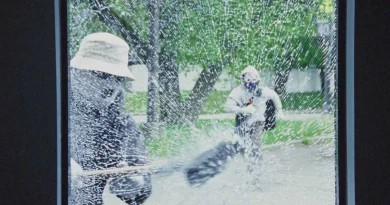
Hasta La Vista, Toronto, You Ended Strong
TIFF 2026’s final set of films include Marine Atlan’s stunning ‘La Gradiva’ to daring works from Iran, France, Japan, and Singapore
It pains me to end my time at the Toronto International Film Festival so soon, but such is life. It may not have been the strongest edition of the festival I’ve ever attended, but I was surprised at how many movies I enjoyed compared to usual. I even caught some of my favorite films later during the festival, another lesson that, when attending film festivals, you must trust the process. Your favorite movie could very well be your next; that’s all the motivation you need to keep moving from one screening to another.
La Gradiva is the best film I’ve seen at the festival (and the best I’ve seen this year). It’s almost impossible to believe this is only cinematographer-turned-filmmaker Marine Atlan’s debut feature; it’s the type of film directors spend entire careers trying (and often failing) to make. The 145-minute film follows a group of final-year high-schoolers on a class trip to Pompeii, mainly focusing on three of the characters and their complicated relationships with one another. The narrative progresses slowly, as Atlan uses the Neapolitan environment and ambience to reveal the inner psyches and sadness of the film’s central characters. Regardless, the filmmaker doesn’t lose your attention for a single second. Among many other things, La Gradiva is the story of a generation searching for meaning, and what happens when people think they can’t find it. It’s layered, intricate, and poetic, and I cannot wait to see it again.
Look Back is Japanese auteur Hirokazu Kore-eda’s second film of the year (following the shockingly disappointing Sheep in the Box). This film has more hype around it. It’s the live-action adaptation of a wildly popular one-shot manga of the same name, which was adapted into a critically acclaimed anime in 2024. The story follows two unlikely friends who meet in middle school, connected by their passion for drawing manga. The story is compelling, heartfelt, and emotionally heavy, and it’s a beautiful treatise about the sacrifices people make for their passions. While somewhat effective, the live-action rendition is far less compelling than its dynamic anime inspiration (partly because of the medium, and partly because it’s easier to suspend your disbelief with animation). Kore-eda’s unique voice as a filmmaker feels diluted and underdeveloped because the film anchors itself too closely to the source material. As a result, it lacks the emotional flair and tenderness that make Kore-eda’s best works so impactful.
Strong Son is a quiet film that follows a former bodybuilder (Mandeep Sodhi) who returns to his family home in Winnipeg to care for his elderly father (Amrit Parbhakar). At only 88 minutes, this well-shot debut feature from Canadian filmmaker Ian Bawa (adapted from a short film of the same name) takes its time exploring the psyche of its central character, a storytelling decision that both helps and hurts the film. It’s easy to understand how the film worked as a short, especially given its somewhat simple and expected final-act thematic reveal; it’s hard not to want a bit more depth from this feature adaptation.
Iranian filmmaker Pegah Ahangarani’s Rehearsals for a Revolution is half personal essay, half recounting of the decades of violence Iranian citizens have faced at the hands of their government. Divided into five sections, each dedicated to a different figure (and fighter) in her life, Ahangarani’s work is a well-narrativized and effective testament to those who fight for their freedom, no matter the cost. Though the blend between personal and political storytelling isn’t always smooth, the documentary never loses focus and is a difficult but necessary watch.
The Unknown, the newest film from Arthur Harari (co-screenwriter of 2023’s Anatomy of a Fall), is a striking, disturbing thriller about body disassociation. The film follows a reclusive photographer (Niels Schneider), who switches bodies after hooking up with a cocktail waitress he recognizes as a party (Léa Seydoux). The utterly surreal first 20 minutes set the stage for a shocking and upsetting two hours to follow. It’s not hard to see how this film had a divisive reaction and mass walkouts at Cannes. Harari bites off more than he can chew with the film’s script, which could benefit from deeper characterization. Even so, it’s relentlessly entertaining, fairly gnarly, and one of the only modern films I’ve seen that captures what derealization feels like — especially on the bodily level.
Ah Girl is an upsetting, reality-soaked coming-of-age story. Set in 1994 Singapore, the film follows “Ah Girl” (Ong Xuan Jing), a seven-year-old girl who lives with her younger sister, her deadbeat (often absent) father, and her grandma, and sees her mother on weekends. There are narrative beats throughout (the main being how Ah Girl’s father wants to sell her sister to another family to make quick money), but it’s mainly a scattered portrait of a child forced to come of age quickly, consistently disappointed by the adults around her, their insecurities, and their quarrels. Xuan Jing’s performance is wonderful, bringing the script to life and making Ah Girl impossible to forget.
You May Also Like
-
 September 21, 2023
 -
 September 15, 2025
 -