
Questlove’s Earth, Wind & Fire Doc Shows the Glory and the Grit
Turns out the celestial soul supermen were mortals after all
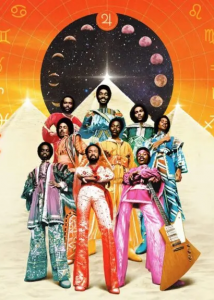 There aren’t many bands who would have Stevie Wonder, Barack and Michelle Obama, Flea, and Lionel Richie all singing their praises in a documentary. In fact, Earth, Wind & Fire might be the only one, which is rather fitting, considering the eclectic, even syncretic nature of their sound, and their pan-genre multiracial crossover appeal.
Having established his rep as a man who knows his way around a music documentary over the last few years with Summer of Soul, Ladies & Gentlemen…50 Years of SNL Music, and Sly Lives, there was little doubt that Questlove would make a feast of the Earth, Wind & Fire story. And using no-holds-barred interviews and vivid vintage footage, the drummer-turned-director captures both the kind of elemental force for which the band is named and the messy contradictions that give his eponymous HBO film its subtitle: To Be Celestial vs That’s the Weight of the World.
Earth, Wind & Fire (To Be Celestial vs That’s the Weight of the World) ★★★★ (4/5 stars)
Directed by: Ahmir “Questlove” Thompson
Running time: 129 mins
At its core, the doc is naturally about the journey of singer, drummer, and bandleader Maurice White, whose vision birthed the band and kept its heart beating for so long. So, it begins where he began, examining his Memphis boyhood, the racism he experienced as a child, and the fractured family life (dead father, absent mother) that would inform just about everything that followed for him.
EWF would have never existed if a young Maurice hadn’t had his inner void filled by blues, jazz, and drumming. And we follow his post-high school move to Chicago, where the former only child was finally reunited with his mother and bonded with a new set of siblings.
Fortunately for Maurice, Chicago blues hub Chess Records was hopping at the time, and he became their house drummer, playing on records by an imposing array of giants, including Etta James, Howlin’ Wolf, Muddy Waters, and more. Questlove chronicles White’s time with pianist Ramsey Lewis’s trio, which was the hottest thing in jazz at the time. In the late ‘60s White was affected by the elements swirling around him in Chicago — the racial friction that brought about groups like The Black Panthers; the city’s booming Black arts movement with Afrocentric bands like Phil Cohran’s Artistic Heritage Ensemble (from whom Maurice discovered African “thumb piano” the kalimba).
By contrast, we learn that it was a book by a white man from Appalachia, famed fraudster Napoleon Hill’s self-help hit The Law of Success, that lit the fuse for White on all these ideas swirling around in his head. Deciding it was his time to shine, he moved to L.A. with his bass-playing brother Verdine in 1970 to start Earth, Wind & Fire and realize his vision of changing the world through music.

The ascendance of hippie-adjacent new age consciousness on the West coast at the time, from organic food to metaphysics, fit in just right with Maurice’s blossoming vision. He named his new band based on his astrological chart. It was during this time he met future wife Marilyn, who provides one of the doc’s biggest potential laugh lines by recalling her mother’s first question about Maurice: “Is he Jewish?”
The band’s first incarnation was pretty far from the hit machine the world would come to know. The original EWF’s blend of jazz, R&B, and cosmic content was quirky, freewheeling, unpredictable, and yes, uncommercial. They were essentially a niche band, playing the Black college circuit and releasing records that flew below the mainstream radar.
Questlove prioritizes putting all of Maurice’s contradictions out there. On one hand, EWF abjured typical rock-star hedonism, opting instead for a spirituality and cosmic consciousness that was reflected in their work. Instead of getting high and trashing hotels, they were reading Kahlil Gibran, practicing transcendental meditation, and getting into health food. (We even learn the confoundingly complex details of White’s notorious “green juice” recipe in the bargain). But a little later, interviews with the band members (including White’s brothers Verdine and Fred) and Marilyn reveal Maurice’s controlling, self-serving side. His perfectionism crossed the line into control-freak territory, he slept around and had multiple kids outside his marriage, and he was stingy with money and credit for his fellow band members.
But the film’s real raison d’etre is to document the glory of Earth, Wind & Fire at their best. Questlove homes in on the start of their golden period as their appearance at 1974’s California Jam outdoor festival, where they were the only Black band playing for 250,000 people. The movie underlines the point with footage of EWF busting it out in their Vegas spaceman outfits. And we follow them into their full flowering as Maurice’s studies of Egyptology and Afro-futurism inform the costumes, choreography, and stage sets of unprecedented celestial stage spectacles.

We find out that everyone from The Wiz choreographer George Faison to superstar magician Doug Henning was consulted to make these shows audovisually stunning events. The phenomenon is underscored by footage of Verdine appearing to levitate while playing. At this point Questlove begins to reveal the real impact of the band. Barack Obama describes the wonder and inspiration he took away from seeing them at the time, and it’s implied that Michael Jackson was literally taking notes at the shows. Discussing the impact of “Shining Star,” Stevie Wonder confesses that the song directly inspired his classic “I Wish,” and you can hear Questlove offscreen being stunned by the revelation.
The film’s later segments don’t shy away from the bad times: lackluster 80s albums, Maurice unceremoniously breaking up the band, the uphill climb of their eventual reunion. But Q keeps coming through with delicious nuggets, like EWF singer Phillip Bailey detailing why the chronically misinterpreted “Reasons” was anything but a love song and saying, “If you played it at your wedding, I’m sorry.” And Marilyn seeming to literally feel Maurice’s spirit when mentioning his name, rubbing her arms and exclaiming, “I just got chills. I feel you, baby!”
And even when things turn the saddest, describing the struggles with Parkinson’s Disease that ended Maurice’s life, some sunlight peeks through. We discover that he took the time to grab for a slice of redemption, becoming closer with the children he’d been too distant from for too long. By the time we arrive at the finish of Earth, Wind & Fire’s story, Questlove has managed to sum up both the celestial and earthbound aspects of their saga with the penetrating view of a documentarian and the heart of a fan.
You May Also Like
-
 November 28, 2022
 -
 January 15, 2024
 -
 December 23, 2019
