
BFG Podcast #314: Lanterns, Coyotes, Acme Discussions
Neal and Rob unpack private equity and falling anvils; Neal and Nick pick over HBO’s new superhero series
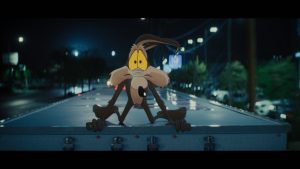
Every so often, we witness a great screen performance that generations to come will remember. That’s happened this week with the arrival of Coyote Vs. Acme, the long-shelved Looney Tunes-live action hybrid. Wile E. Coyote plays his signature role–himself–in the long-awaited movie, which Warner Brothers tried to deny us, taking a tax writeoff instead. Host Neal Pollack and guest Rob Kutner unpack the meaning of that private-equity move, and parse the utter hilarity of Coyote Vs. Acme, unleashing a Rube Goldberg-like segment that will hit you on the head like a hammer.
But first, Nick Tangborn joins Neal to talk about Lanterns, which Sam Porteous wrote about on BFG. Admittedly, Neal and Nick talked about Lanterns before the HBO Max/DC Universe show dropped its controversial race-tinged episode three, which didn’t bother Neal because of the race tinging, but rather because of the unnecessary non-linear narrative structure. Not everything has to be a puzzlebox, and certainly not everything about a cosmic struggle for the powers of a magical intergalactic ring has to be a puzzlebox. Still, there’s plenty in Lanterns to keep comic-book fans happy. Lovers of linear narratives should apply elsewhere.
Enjoy the show!
Good discussion of Lanterns. I’ll also stay off of episode three for now. But one thing I should have mentioned in my piece and would flag now for Lanterns viewers and those interested in the mythos is the critical influence on “Lanterns” of the much heralded DC Comics Green Lantern /Green Arrow team up of the early 1970s. The “Hard Travelin’ Heroes” series penned by a young Denny O’Neil and featured the unparalleled artwork of the dearly missed Neal Adams – perhaps the greatest Silver Age comic artist. The artwork Adams produced for that series is unparalleld. In that storyline Hal Jordan’s Green Lantern is pulled down out of space and into an extended road trip with a testy Green Arrow across a horribly divided and challenged America. Timely! During their travels the duo faced–in an entertaining not overly proselytizing way– issues such as addiction, racism, and political corruption. In doing so the Green Lantern series went where no comic went before and played a key role broadening the range of issues comics could cover and dragging the antiquated Comics Code Authority – creature of the Kefauver Hearings of the 1950s – along with it. That early 1970s DC GL series clearly left its impact on the creators of Lantern as much or more as True Detectices season one.