
10 of the Best TV Scenes of 2025
When Demi Moore, Gary Oldman, Parker Posey and others stole the small screen.
Sometimes, it’s not a whole show that sticks with you. It’s one scene, a snippet that haunts you or makes you laugh, even after repeated views. For this 2025 retrospective, I’m sharing my 10 favorite television scenes this year, in no particular order. (Mostly) spoiler-free!
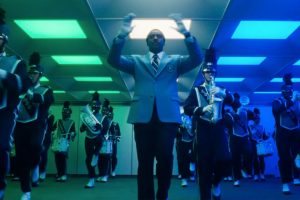
1. Severance: Mr. Milchick Channels A HBCU, Apple TV
Listen, you can talk all you want about whether it was Helly’s innie or outie in the finale, but Tramell Tillman’s band segment is what I will remember from a sometimes-muddled second season of Severance. When Milchick doffs his blazer, catches a baton mid-air, and leads the marchers around the ever-narrowing, suffocating Lumon cubicle farm – things got bizarre, beautiful, dizzying and compelling.

2. Landman: Demi Moore’s Luncheon, Paramount +
Poor Demi Moore spent the entire first season of Landman with very little to do, swanning around the house like the rich Fort Worth oil wife she was. The female characters on Landman often feel like one-note stereotypes: silly/sexy blond rich mom and daughter; hard-driving lady lawyer; grieving young widow with a heart of gold. Yet as the second season gets rolling, Taylor Sheridan finally gives his leading lady some red meat, and boy, does Moore barbecue. Her speech to the gathered execs circling in the wake of her husband’s death is all Iron Yellow Rose, partially fueled by some mean girls in the restroom. Moore’s breakdown at the end of the episode, clutching a photo of her dead husband, is a close runner up. Here’s hoping we see more of Moore as Season 2 progresses.
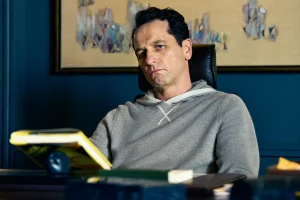
3. The Beast in Me: “Psycho Killer,” Netflix
I’ve been a sucker for Matthew Rhys ever since The Americans (which I’m also re-watching this year). Nile Jarvis, Rhys’ ingratiating real estate developer who maybe killed his first wife on The Beast in Me, is intoxicating and terrifying. I too would ugly cry like Claire Danes if I had to deal with this guy constantly popping by for a visit. Still! Tipsy Nile puts on the vinyl and – ha ha ha – it’s the Talking Heads’ classic “Psycho Killer.” Nile, you scamp! Rhys makes it work because he’s so darn charming, even if we know in our hearts he’s a baddie.

4. The Pitt: Dr. Robby’s Desperation, HBO Max
I’ve heard from so many docs and nurses that The Pitt is the most realistic depiction of hospital life they’ve seen. It’s certainly gripping television, and it’s hard to pick just one scene. Dr. Robby (Noah Wyle) breaking down and murmuring the Shema? The parents of a college boy unwilling to accept that one pill killed? Be still my Jewish mama heart. The one that stands out for me, though, is Dr. Robby feverishly working on his son’s girlfriend after a mass shooting event at a music festival. After episodes watching him gently counsel residents when to acknowledge defeat, his abject refusal to do the same illustrates that no matter the protocol, nothing is routine when it happens to you.

5. The Studio: Kathryn Hahn’s Note, Apple TV
Kathryn Hahn is a delight in everything, and her foul-mouthed, bedazzled PR head in The Studio is no exception. Maya never simply enters a room when she can burst into it, and Hahn’s portrayal of this unfettered id is electrifying, even if you might cringe at her profound lack of filter. So many moments (“Steve Bus-kemi is absolutely the worst-case skenario,” a line Hahn ad-libbed), but my standout is her whiplash-y code switch over “the note” to tell Ron Howard the last 45 minutes of his new film suck. “The movie is a masterpiece. I wouldn’t change a fucking thing,” she begins, caroming right into “Mad respect! Thank fucking God” once told the star also hates this sequence. It encapsulates the ass-kissing inherent in Hollywood and the bare-knuckled energy it takes to get films across the finish line.

6. Pluribus: Rhea Seehorn Stops the Plane, Apple TV
Rhea Seehorn should have an Emmy by now for her portrayal of Kim Wexler in Better Call Saul, and it feels like justice that Vince Gilligan created this show specifically for her. What starts with a sci-fi/horror premise – an alien virus kills off much of the population, and virtually all of the survivors are a hive mind – quickly becomes a meditation on happiness and belonging. Seehorn plays Carol Sturka, a prickly romantasy author who is one of a dozen people left on earth retaining their own thoughts. Fiercely independent Carol insists she doesn’t need anyone, but nevertheless flags down Air Force One (really) to re-board a flight with some of the few other people she’s come to know since the catastrophe. It’s a potent reminder that we need people – even if we think we can go it alone.
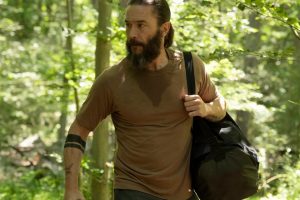
7. Task: Tom Pelphrey Explains, HBO
Fans of Ozark will remember Tom Pelphrey as Laura Linney’s doomed brother, equal parts mania and malaise. Pelphrey’s role in Task – a thriller from Mare of Easttown creator Brad Inglesby, co-starring Mark Ruffalo – is almost a continuation of that Ozark role. From the second we meet Robbie, we see that he can’t possibly come to a good end. It’s to Pelphrey’s credit that we root for him even as he ladles poor decisions onto a foundation of mistakes. At the beginning of episode 3, there’s one of many fantastic Robbie moments, when he explains to his niece (truly the glue binding this fractured family together) what drives him. It’s incredibly compelling, even if his actions thus far in the show are death-wish scaffolding.

8. The White Lotus: Parker Posey Loves Money, HBO
This season of The White Lotus wasn’t a critical darling like the first two. But creator Mike White’s genius this go-round was casting Parker Posey, whose North Carolina white-rich-lady patois launched a thousand memes. It’s hard to choose just one bon mot – this cries out for a supercut – but I shall skip over the obvious “Piper, nooooo” and choose one of the many moments when Victoria Ratliff utters a totally bonkers sentence as though it is totally obvious. Swanning about in a caftan, Victoria rejects the idea that Piper’s year in a monastery will be a character-building exercise. “I don’t want her thinking she’ll be just fine if she’s poor,” Victoria intones. “She needs to fear poverty, Tim, like everyone else we know.”

9. Slow Horses: Finale, Apple TV
This one’s a spoiler, so consider yourself warned. Former New Yorker television critic Emily Nussbaum said once that the best shows teach you how to watch them, and Slow Horses is a great example. Crotchety Gary Oldman quasi-manages a bunch of MI5 rejects from a house almost as decrepit as he is. Naturally, he’s incredibly effective, and this season, we get another peek into why. In an earlier episode, Lamb spins a tale of a spy burned and tortured by German secret police, an operative who kept his mouth shut even as he watched officers bludgeon his pregnant lover. Lamb later insists the story was pure fiction, but in the final scene, we see the camera focus on his horribly scarred foot. The moment tells us that not only was the story true, it’s part of what’s led Lamb to be such an unrelenting misanthrope. A few seconds is enough to make you re-evaluate the preceding four seasons.
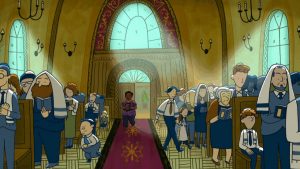
10. Long Story Short: Kendra’s Yom Kippur, Netflix
I first started watching this animated series from BoJack Horseman creators Raphael Bob-Waksberg and Lisa Hanawalt because it was all about a Jewish family. I kept watching because of the inventive timeline and its depiction of family bonds preserved through ritual or browbeating. Hey, whatever works! Long Story Short is funny but also thought-provoking. It maps modern Judaism as more than a fun lifestyle lark (see You Are So Not Invited To My Bat Mitzvah), one flavor among many of LA’s overweening narcissisms (see Nobody Wants This), or overly prescriptive (see Unorthodox). To wit: Kendra, the non-Jewish Black partner of one of the characters, finds herself at synagogue on Yom Kippur. It’s the holiest day of the year, and one when a central prayer invites us to reflect on all the ways we have sinned in the previous 12 months. The kindness of a fellow congregant reminds Kendra that the prayer is about sharing the load – not being perfect. It’s a nuance you might not expect from an animated show, and embodies the heart beyond the humor.
You May Also Like
-
 February 18, 2025
 -
 November 11, 2022
 -
 August 19, 2021
